A customer in Orlando needs help now. They search on their phone, scan the map results, read a few reviews, tap one listing, and call. If your business doesn't appear, the lead doesn't wait. It goes to the company that showed up with the clearest profile, the strongest trust signals, and the easiest next step.
That is the core challenge with local seo lead generation. Most businesses are not losing because they offer a worse service. They are losing because their visibility is inconsistent, their Google presence is incomplete, and their tracking is too weak to tell them where leads come from.
The upside is big. Research demonstrates that 78% of local searches lead to direct purchases, which is why local search remains one of the highest-intent channels a business can invest in. If you're a service company in Central Florida, that means many of the people searching aren't browsing casually. They're looking for someone to hire.
If you want a useful primer on the map pack side of this, the Adwave guide to local marketing is a solid companion read. If your problem is more basic and you're asking why you aren't visible at all, start with why your business may not be showing up on Google.
Table of Contents
- Your Local Business is Leaving Money on the Table
- Master Your Digital Storefront with Google Business Profile
- Find Ready-to-Buy Customers with Local Keyword Research
- Create Content That Converts Local Searchers
- Build Unshakeable Local Authority and Trust Signals
- Track Real ROI and Scale with AI Automation
- Build Your Local Lead Generation Engine
Your Local Business is Leaving Money on the Table
A lot of local businesses are operating with a false sense of security. The website exists. The phone number is on the homepage. Maybe there are a few reviews. From the owner's seat, that can feel like enough.
It isn't.
When someone searches for a local service, they're comparing options in seconds. They don't care how much effort went into your site redesign last year or whether your office manager remembers to update business hours. They care about speed, clarity, trust, and convenience. If a competitor gives them those signals first, that competitor gets the lead.
The hidden cost of being almost visible
Being buried in local search is like renting a storefront and keeping the lights off. Your business still exists, but buyers pass by without stopping. That's why local seo lead generation has to be treated as a system, not a checklist.
Three things usually break first:
- Inconsistent visibility: Your business appears for some searches but disappears for the high-intent ones.
- Weak conversion paths: Searchers find you, but the phone number, booking flow, or location details create friction.
- No attribution: Leads come in, but nobody knows whether they started from Maps, organic search, reviews, or a location page.
Local search rewards the business that removes the most uncertainty, not the business that writes the fanciest marketing copy.
Why local intent matters more than raw traffic
A national keyword might bring more impressions. That doesn't mean it brings more revenue. Local buyers usually search with a problem, a place, and a short decision window. That's why this channel produces stronger lead quality than vanity traffic campaigns.
In practice, that means an Orlando plumber, Charlotte med spa, or Lake Mary law firm should care less about broad visibility and more about owning the moments when a nearby buyer is ready to act. That's where a real local seo lead generation strategy pays off.
Master Your Digital Storefront with Google Business Profile
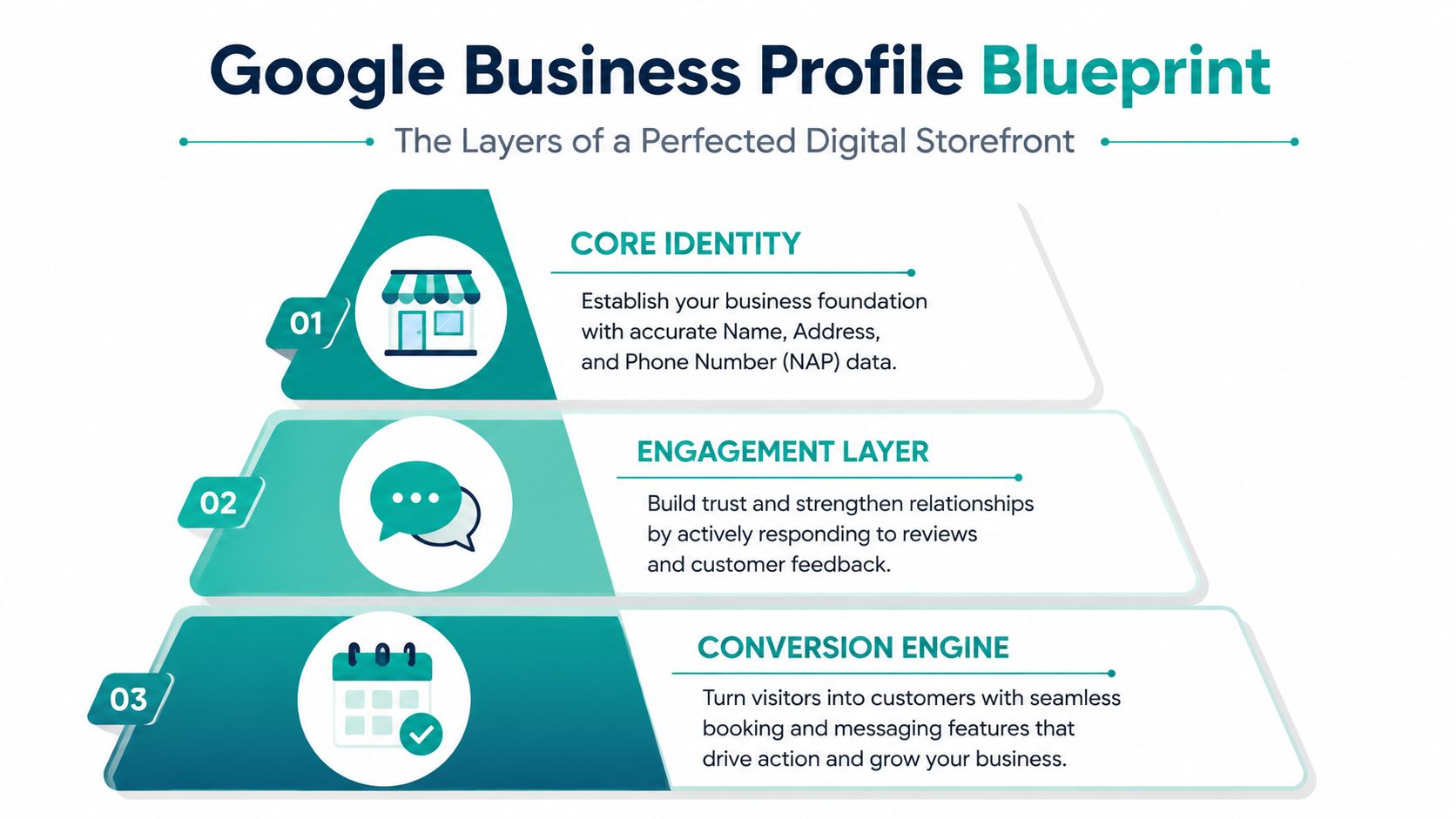
A nearby customer searches your service on their phone, sees the map pack, compares three listings, and calls one business within minutes. In many cases, that decision happens before any website visit. Your Google Business Profile has to work like a front desk, sales sheet, and trust page at the same time.
Google notes that a complete Business Profile helps customers take action directly from Search and Maps on calls, visits, bookings, and directions requests. That changes the job of local SEO. Your profile does not just support rankings. It has to convert zero-click searchers into measurable leads.
If you want a second technical perspective on profile optimization, this breakdown on increasing industrial leads with GBP is worth reviewing. For a business-specific implementation checklist, see how to optimize your Google Business Profile.
Your profile is a lead capture asset
Business owners often treat GBP like a directory listing. They verify it, add hours, and leave it alone for six months. That leaves money on the table because a buyer can decide to call, request directions, message, or move on without ever opening your site.
A lead-generating profile answers five questions fast:
- Who are you?
- What do you do?
- Where do you serve?
- Why should I trust you?
- How do I contact you right now?
If any answer is vague, the profile creates friction at the exact moment a buyer is ready to act.
Practical rule: If a searcher has to dig for services, service area, hours, or contact options, your profile is underbuilt.
What a high-performing GBP actually needs
A complete profile is the baseline. A profile that generates leads is built around buyer intent and operational reality.
Use this standard:
| Profile area | What to include | Why it matters |
|---|---|---|
| Business identity | Exact business name, correct primary category, accurate phone, hours, and address or service area | Category relevance affects visibility, and clear business details reduce drop-off |
| Services | Individual service entries written in plain language buyers use | Service detail improves match quality for local searches and clarifies what to call about |
| Photos | Real exterior, interior, team, equipment, and completed work photos | Buyers use visual proof to judge legitimacy before they contact you |
| Reviews | Recent reviews that mention specific services and locations, plus owner responses | Review velocity and relevance strengthen trust and improve conversion rates |
| Q&A | Clear answers to common objections, pricing questions, and service-area questions | Good Q&A removes hesitation without forcing a website visit |
| Messaging and booking | Only enable features your staff can monitor and fulfill consistently | Fast response times create leads. Slow response times waste them |
There is a real trade-off here. Every feature you turn on becomes an expectation. If nobody can answer messages within a reasonable window, leave messaging off until the process is staffed. If your booking tool breaks on mobile, fix it before you send local demand into it.
Zero-click search changes what you measure
Website traffic still matters, but it is no longer the only score that counts. For local businesses, a strong Google Business Profile can produce calls, direction requests, bookings, and branded searches without a pageview ever showing up in analytics.
That is why GBP belongs inside a trackable lead generation system. Use call tracking where appropriate. Tag booking links. Review profile performance alongside CRM outcomes, not in isolation. If reviews go up, photos improve, and calls rise from map visibility, you can connect activity to revenue instead of guessing.
The businesses that win local search do not treat GBP as a one-time setup task. They treat it like a managed sales channel.
Find Ready-to-Buy Customers with Local Keyword Research
Bad keyword research sends businesses after volume they can't convert. Good keyword research finds the phrases people use when they need help nearby and don't want to waste time.
That shift sounds small, but it changes the entire lead flow.
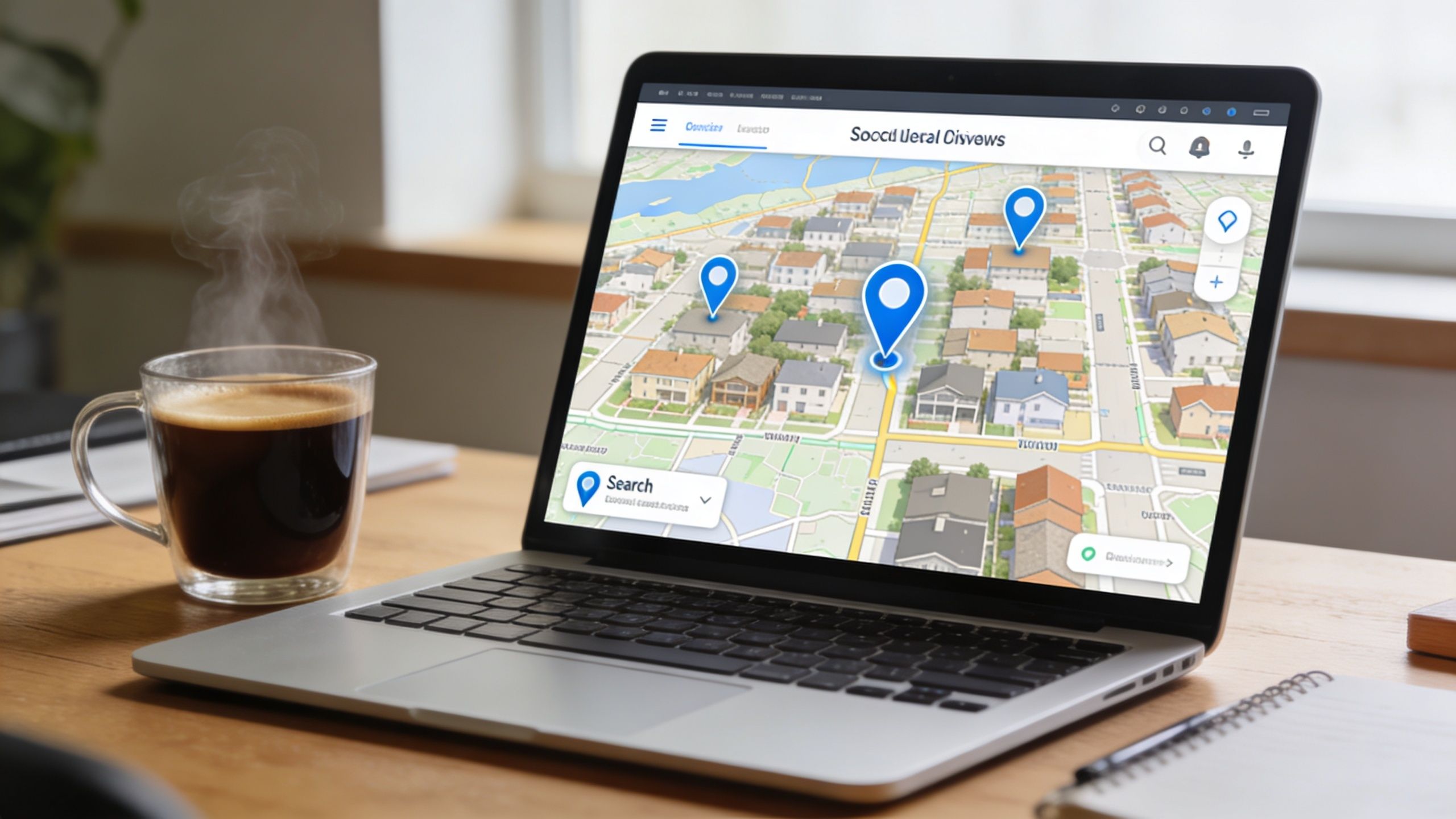
Broad traffic is not the goal
A roofer doesn't need to rank for "roofing" in the abstract. An HVAC company doesn't need generic traffic for "air conditioning." Those terms are too wide, too mixed, and often too far from a buying decision.
A stronger approach starts with how a real local customer searches:
- Service plus location: "AC repair Winter Park"
- Urgency plus location: "emergency roof repair near Lake Nona"
- Problem plus local qualifier: "water heater leaking Orlando"
- Commercial intent terms: "best family lawyer Lake Mary" or "dentist open Saturday near me"
Those phrases reveal context. They tell you what the person needs, how urgent it is, and where the conversion should happen.
How to sort keywords by buying intent
Don't build one giant keyword list. Sort terms by the action they imply.
One simple framework works well:
- Immediate buyers: Terms with words like repair, emergency, near me, same day, quote, lawyer, dentist, contractor. These belong on service pages and high-conversion landing pages.
- Comparison shoppers: Terms with modifiers like best, top, affordable, reviews, cost. These need proof, FAQs, and trust content.
- Early researchers: Question-based searches and educational queries. These belong in blog content and support pages that move searchers toward a direct inquiry.
The page type should match the keyword type. That's where many campaigns break. Businesses target local terms but send all traffic to a homepage that says a little about everything and closes on nothing.
A practical way to pressure-test your keyword list is to read each phrase and ask, "Would someone type this right before contacting a business?" If the answer is yes, it deserves attention.
For teams that want help organizing search patterns by local niche, ListingBooster.ai's SEO tools for agents show a useful way to structure keyword research around location and buyer intent, even outside real estate.
Before you build pages, watch how local intent shifts page structure and messaging in practice:
A broad keyword brings attention. A local buying-intent keyword brings a conversation with someone who may hire you.
Create Content That Converts Local Searchers
Keyword research gives you targets. Content gives those targets a place to rank and a reason to convert. Without the right page architecture, local seo lead generation turns into a pile of good intentions sitting on a generic website.
Most local sites need fewer vague pages and more specific ones.
Build pages for services and places
A strong local site usually needs three content layers working together.
First, you need core service pages. These explain what you do in plain language, show proof, answer objections, and make contact easy. A page for "web design" or "personal injury law" shouldn't try to cover every city and every audience at once.
Second, you need location-focused pages. These are for the places you serve. A useful location page isn't a city name swapped into a template. It should reflect that area's context, common customer concerns, service availability, and local trust signals.
Third, you need supporting content. Blogs, FAQs, and resource pages help capture earlier-stage local searches and reinforce authority around the service-location pairing.
Use blog content to support demand capture
A blog shouldn't exist to publish filler every week. It should remove friction before the sales conversation starts.
That means writing pieces like:
- Local service questions: "How long does AC replacement take in Central Florida homes?"
- Location-specific concerns: "What business owners in Lake Mary should know before redesigning their website"
- Decision support content: "How to compare local med spa providers before booking"
Each article should point naturally toward a service page or location page. That's how your content system turns education into action instead of producing isolated traffic.
A quick quality check helps here:
| Page type | What it should do | Common mistake |
|---|---|---|
| Service page | Convert buyers already looking for the service | Talking about the company more than the problem |
| Location page | Prove relevance in a specific market | Repeating the same copy with only the city changed |
| Blog post | Build trust and answer questions | Publishing broad topics with no local angle |
If your pages get visits but don't produce calls or forms, the issue often isn't ranking. It's messaging, structure, or conversion design. This guide on how to improve website conversion rates is a useful next step if your site attracts attention but doesn't turn that attention into inquiries.
Build Unshakeable Local Authority and Trust Signals
A local searcher often decides in under a minute. They see your Google Business Profile, scan a few reviews, glance at your website, and ask one question: does this business feel safe to contact?
That decision drives lead volume more than small ranking differences. Local SEO brings in high-intent traffic, but intent alone does not produce calls or form fills. Trust closes the gap between visibility and action.

Reviews shape the final conversion decision
Reviews influence rankings, but their bigger job is reducing buyer hesitation.
For a homeowner comparing two plumbers or a patient comparing two dentists, reviews answer practical questions fast. Did the business show up on time? Did it communicate well? Did the result match the promise? On zero-click search results, those signals may be all a prospect sees before calling.
That is why review generation needs to be part of your lead system, not a side task someone remembers once a month. A reliable process usually includes:
- Ask after a clear win: Send the request right after the job is finished, the appointment goes well, or the customer expresses satisfaction.
- Use a direct link: Text or email the review link so the customer does not have to search for your business.
- Train the front line: Give staff a simple script they can use naturally.
- Reply to every review: Thank happy customers. Address negative feedback calmly and specifically.
Recency matters. Specificity matters more. Ten recent reviews that mention real services, staff names, and outcomes usually do more for conversion than a larger pile of vague praise from two years ago.
There is a trade-off here. If operations are inconsistent, pushing hard for more reviews will expose that inconsistency faster. Fix fulfillment problems first. Then increase review requests.
Local authority comes from real-world proof
Google looks for corroboration. Prospects do too.
A strong local business usually leaves the same footprint in multiple places: review platforms, local organizations, media mentions, association profiles, event pages, and trusted directories. Each mention reinforces the others. That creates a system effect. Your business becomes easier to verify, easier to trust, and easier to choose.
The strongest authority signals usually come from activity that would still make business sense even without SEO:
- Community partnerships: Build referral relationships with adjacent businesses that serve the same local audience.
- Event sponsorships: Support local events, schools, nonprofits, or business groups that fit your market.
- Local media and podcasts: Contribute expert commentary or practical advice tied to issues people in your area encounter.
- Industry and chamber memberships: Maintain profiles where membership signals legitimacy, not just another logo on a page.
These placements do more than pass authority. They create repeated exposure across the buyer journey. A prospect might see your reviews in Maps, your name on a chamber site, and a quote from your team in a local article. That repetition works like compound trust.
Consistency matters here too. If your name, address, phone number, categories, or service details vary across the web, trust weakens for both search engines and users. If that needs work, review this guide on what a local citation is and how it affects visibility before expanding your authority efforts.
The goal is not to collect random signals. The goal is to build a trackable trust layer around your business so more local searchers choose you without needing extra persuasion.
Track Real ROI and Scale with AI Automation
Most local SEO reporting breaks at the exact moment an owner asks the only question that matters: which activity produced the lead?
That's where a lot of campaigns turn into hand-waving. Rankings look better. Traffic is up. Calls feel stronger. But nobody can clearly separate a lead that came from a Google Business Profile view, a location page, a branded search, or a review-driven map click.
Most businesses cannot distinguish between leads from Google Business Profile reviews, local keyword rankings, or community engagement, making ROI measurement nearly impossible. Implementing proper tracking infrastructure like call tracking and UTM parameters is the only way to connect local SEO efforts to actual revenue.
Traffic is not enough
Traffic is a surface metric. Revenue comes from attribution.
A workable local tracking setup usually includes:
- Call tracking by source: Use different tracking lines where appropriate so calls from GBP, landing pages, and campaigns don't blend together.
- UTM-tagged links: Add tracking parameters to the links inside your business profile and campaign assets.
- Form routing discipline: Make sure forms capture landing page and source data instead of dumping every inquiry into one generic bucket.
- CRM follow-through: Push lead source details into the CRM so sales outcomes can be tied back to the originating channel.
Without that structure, you're making budget decisions from partial information.
Automation closes the gaps humans miss
Once attribution is in place, automation makes the system scalable. Many local businesses have the most room to improve in this area.
A strong automated workflow can:
| Trigger | Automated action | Business impact |
|---|---|---|
| New lead form submitted | Route to the right team member and send immediate acknowledgment | Faster response time |
| Missed call | Trigger text follow-up and internal alert | Fewer lost opportunities |
| Qualified inquiry | Create CRM task and booking reminder | Better sales handoff |
| Review request milestone reached | Send review prompt automatically | More consistent reputation growth |
This is also where AI becomes useful in practical ways, not hype-heavy ways. It can help classify inquiries, prioritize urgent leads, draft first-response messages, summarize call notes, and keep follow-ups moving when staff gets busy.
One option businesses evaluate when building this kind of stack is AI-driven marketing strategies, including workflows that connect lead capture, tracking, and follow-up across channels. The value isn't automation for its own sake. The value is that fewer leads fall through the cracks while your team spends more time closing real opportunities.
If you can't trace a lead from search result to sale, you don't have a growth system. You have activity.
Build Your Local Lead Generation Engine
Local seo lead generation works when the parts support each other. Your Google Business Profile captures high-intent attention. Your keyword strategy targets the searches that signal buying intent. Your content gives those searches a relevant destination. Your reviews, citations, and local links build trust. Your tracking tells you what produced revenue.
Miss one of those parts and the system weakens fast.
This is why disconnected tactics underperform. A polished website without map visibility won't capture enough local demand. A fully optimized profile without strong page content limits expansion. Good rankings without attribution leave you guessing. And all of it becomes harder to manage if your team responds slowly or loses track of inbound opportunities.
Business owners in Central Florida and the Charlotte area don't need more random marketing activity. They need a local lead engine that is visible, credible, measurable, and operationally sound. That's the difference between "doing SEO" and building a channel that produces leads your sales team can effectively close.
If you're ready to turn local search into a trackable source of calls, form fills, and booked appointments, talk with Emulous Media Inc. You can book a free consultation, call 689-255-6327, or visit the contact page to discuss your market, your current visibility, and where your local lead generation system is breaking down.