You're probably in one of two situations right now.
You're paying for Google Ads, Facebook traffic, or Local Service Ads, and the clicks are showing up, but calls aren't. Or your traffic is decent, but the people landing on your site drift around, hesitate, and leave without buying, booking, or requesting a quote.
That usually isn't an ad problem. It's a conversion landing page problem.
Most businesses send paid traffic to pages that try to do too much. A homepage talks about the company, the team, the mission, the blog, the service menu, and maybe the holiday hours. That's fine for browsing. It's terrible for paid traffic. When someone clicks an ad, they shouldn't have to hunt for the next step. They should land on a page that answers one question fast: “Is this exactly what I was looking for, and what do I do next?”
Table of Contents
- Why Your Advertising Leads to Clicks Not Customers
- The Anatomy of a High-Conversion Landing Page
- Landing Pages in Action Industry-Specific Examples
- Measure and Multiply How to A/B Test Your Way to Success
- Your Instant Landing Page Optimization Checklist
- Turn Your Page Into a 24/7 Sales Engine
Why Your Advertising Leads to Clicks Not Customers
A business owner in Central Florida launches a paid campaign for a high-value service. The ads are clean. The targeting is reasonable. Search terms look relevant. Traffic comes in.
Then nothing happens.
The phone doesn't move. The form sits there untouched. Sales starts asking whether the ad platform is broken. It isn't. The traffic did its job. The page didn't.
A homepage is like a front desk person saying, “Welcome, take a look around.” A landing page is a trained closer saying, “You came for this exact solution. Here's why it fits, and here's the next step.” That difference decides whether ad spend becomes revenue or just a report full of clicks.
According to a 2024 Unbounce analysis cited by Genesys Growth's landing page benchmark summary, the median landing page conversion rate is 6.6%, while top-performing pages reach 10%+. That gap is the entire game. It tells you that most pages are average at best, and the winners aren't winning by luck.
Your page is probably breaking the sales conversation
Most underperforming conversion landing pages fail in familiar ways:
- They mismatch the ad: The ad promises one thing, but the page opens with something broader, vaguer, or unrelated.
- They ask for too much too soon: Long forms, cluttered layouts, and multiple choices create hesitation.
- They sound generic: If your copy reads like it could belong to any competitor, visitors won't trust it.
- They send people wandering: Navigation menus, unrelated links, and mixed offers split attention.
A click is not interest proven. It's interest borrowed. Your page has to earn the rest.
If you're writing landing page copy with AI, clean it up before it goes live. Business owners can use tools like humanize essay to remove robotic phrasing and make copy sound like a real person talking to a real buyer. That matters more than people think, especially in legal, healthcare, and home service offers where trust is fragile.
Paid traffic also needs the right campaign structure behind it. If your ads and pages aren't aligned, your budget leaks on both ends. That's why smart advertisers treat PPC advertising networks and post-click experience as one system, not two separate tasks handled by different people.
The expensive mistake
Businesses often obsess over click-through rate because it's visible. Revenue happens after the click. If the page is weak, you're paying to expose the weakness faster.
That's why I'm opinionated about this. A conversion landing page isn't a design accessory. It's the sales environment your ad buys access to. If that environment is confusing, slow, or unfocused, your campaign won't scale no matter how polished the ads look.
The Anatomy of a High-Conversion Landing Page
A good landing page doesn't feel clever. It feels obvious.
The visitor arrives, understands the offer, trusts the business, and knows exactly what to do next. That's the standard. Not flashy animation. Not trendy layouts. Not brand theater.
One promise beats ten ideas
The strongest conversion landing pages are built around a single promise. One audience. One offer. One next step.
Think of the page like a 30-second elevator pitch from your best salesperson. If that salesperson spent the first 20 seconds introducing every department in the company, you'd fire them. Your page should open with the core benefit, not a broad company summary.
For businesses investing in direct-response traffic, message precision matters just as much as design. Teams that sharpen the promise usually also need stronger offer framing and tighter copy structure. That's where dedicated copywriting and scriptwriting support becomes practical, not cosmetic.
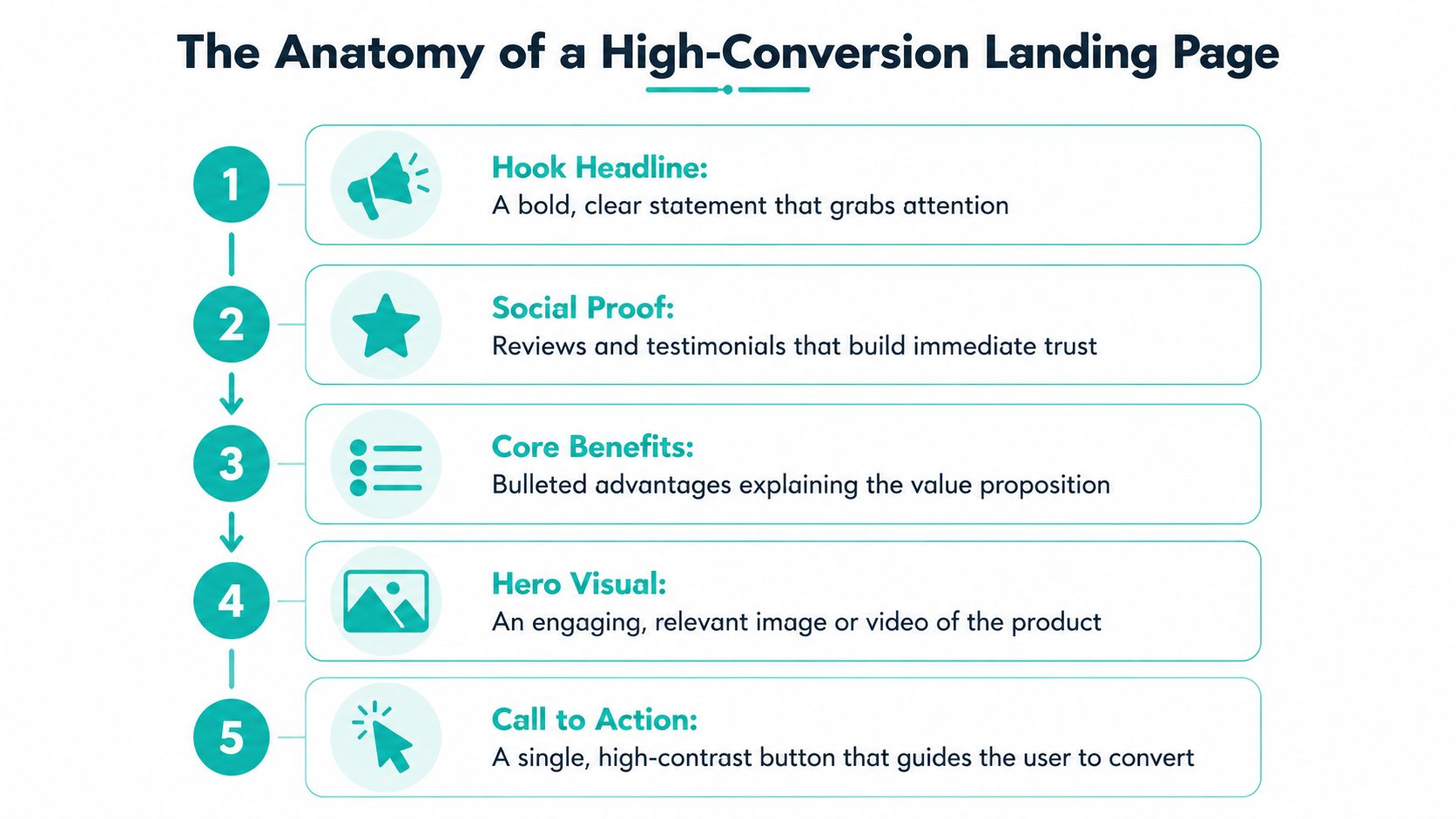
The five parts that actually matter
Here are the elements I consider essential.
A sharp headline
The headline should state the main value in plain English. Not a slogan. Not a brand statement. A promise. If someone searches for emergency plumbing, the page should say emergency plumbing help, fast, clearly, and near the top.A clear call to action
Your button or form needs to answer “what happens next?” with zero ambiguity. “Schedule My Estimate,” “Book Appointment,” and “Get My Quote” are stronger than lazy labels like “Submit.”Low-friction layout
Good UX is invisible. The visitor shouldn't need to think about where to click, what to read first, or how to complete the form. Short forms, clean spacing, and visual hierarchy remove drag from the decision.Fast mobile performance
According to a 2026 summary covering 2.1 million sessions cited by Digital Applied's landing page conversion data roundup, every one-second delay beyond the 2.5-second Largest Contentful Paint threshold cuts conversions by about 7%, and pages loading in under 1.5 seconds convert 2.4x better than pages loading in 4 seconds. That's not a technical footnote. That's margin.Trust signals placed where doubt appears
Reviews, credentials, guarantees, logos, product ratings, before-and-after visuals, and clear proof belong near decision points. Don't make people scroll through a desert of claims before they see anything believable.
Practical rule: If a visitor has to interpret your page, you've already added friction.
A lot of businesses ruin this structure with “nice to have” elements that kill momentum. Auto-playing video headers, oversized images, sliders, and decorative motion often make the page feel expensive while diminishing response.
Here's the blunt version:
- If it delays clarity, cut it
- If it slows the page, compress it or remove it
- If it competes with the CTA, demote it
- If it doesn't reduce doubt, it doesn't belong
The best conversion landing pages don't impress designers first. They convert buyers first.
Landing Pages in Action Industry-Specific Examples
The biggest mistake I see is businesses copying a landing page style from the wrong industry.
A skincare brand can use a richer visual story because the buyer is browsing, comparing, and imagining use. A law firm can't rely on that same structure. A legal prospect wants competence, credibility, and a straightforward next step. Different intent requires different page architecture.

E-commerce needs buying momentum
For e-commerce, the page has to collapse hesitation fast. The product image needs to be strong, the benefit stack needs to be skimmable, and the purchase path needs to stay clean.
A good product-focused landing page usually includes:
- A strong hero visual: The product should be visible immediately, not buried below lifestyle fluff.
- Simple benefit bullets: What it is, why it's useful, and why this version is worth buying.
- Visible proof: Reviews, user-generated content, guarantee language, and clear policy cues.
- A purchase CTA that stays close: “Add to Cart” should never feel hidden.
This is one reason manufacturers and product sellers often need a different inbound approach than service companies. The buying journey changes based on the product, category, and audience, which is why manufacturer inbound marketing strategies often lean heavily on product education, trust, and conversion-focused page sequencing.
Local service industries need fast trust
Now compare that to home services, healthcare, or legal.
A homeowner looking for an AC repair company in Orlando doesn't want to browse your brand story. They want to know three things fast. Can you solve the problem, can they trust you, and how do they contact you right now?
The same goes for a dental practice or law office. The offer may be different, but the psychology is similar. The person is evaluating risk.
According to guidance summarized by Apexure's landing page design resource, 44×44 pixel tap targets and accessible forms are essential for mobile-heavy industries like home services, healthcare, and legal, and each additional second of mobile load time can cost 7% in conversions. That means the little details on mobile aren't little at all.
For these industries, I recommend pages built around:
- Immediate intent match: The headline should mirror the service the visitor searched for.
- Prominent mobile actions: Call now, book now, request consultation.
- Visible legitimacy: Licenses, accreditations, testimonials, service areas, and real team imagery.
- Short forms: Ask only for what sales or intake needs.
The right landing page for a plumber is built for urgency. The right landing page for a dentist is built for reassurance. The right landing page for an attorney is built for trust under pressure.
Template thinking breaks here. The structure has to fit the buyer's mindset, not your favorite website style.
Measure and Multiply How to A/B Test Your Way to Success
Launching the page is the start of the work, not the finish.
Too many businesses publish a landing page, glance at it once a month, and assume it's “fine.” That's how mediocre performance turns into a permanent operating cost. If you're buying traffic, you need to treat the page like a live sales asset under constant review.
Read the page like a sales report
Three signals tell you a lot quickly:
- Conversion rate: Are visitors taking the action you paid to drive?
- Bounce rate: Are they leaving before engaging?
- Time on page: Are they reading, or are they confused and stalling?
None of these metrics should be read in isolation. A long time on page can mean engagement, or it can mean your message is muddy. A high bounce rate can mean the page is weak, or the traffic source is mismatched. The job is to read the story behind the numbers.
One of the most overlooked fixes is page variation by traffic source. As noted in FormAssembly's discussion of converting landing pages, a paid search visitor and a warm email subscriber arrive with different intent, and strong campaigns often use distinct landing page variants. That difference helps explain why average pages sit near the middle while elite pages perform much better.
If you want a cleaner view of visitor behavior, session replay and on-page interaction tools can help. Platforms like WearView AI are useful when you need to see where people hesitate, rage-click, or abandon forms before you decide what to test.
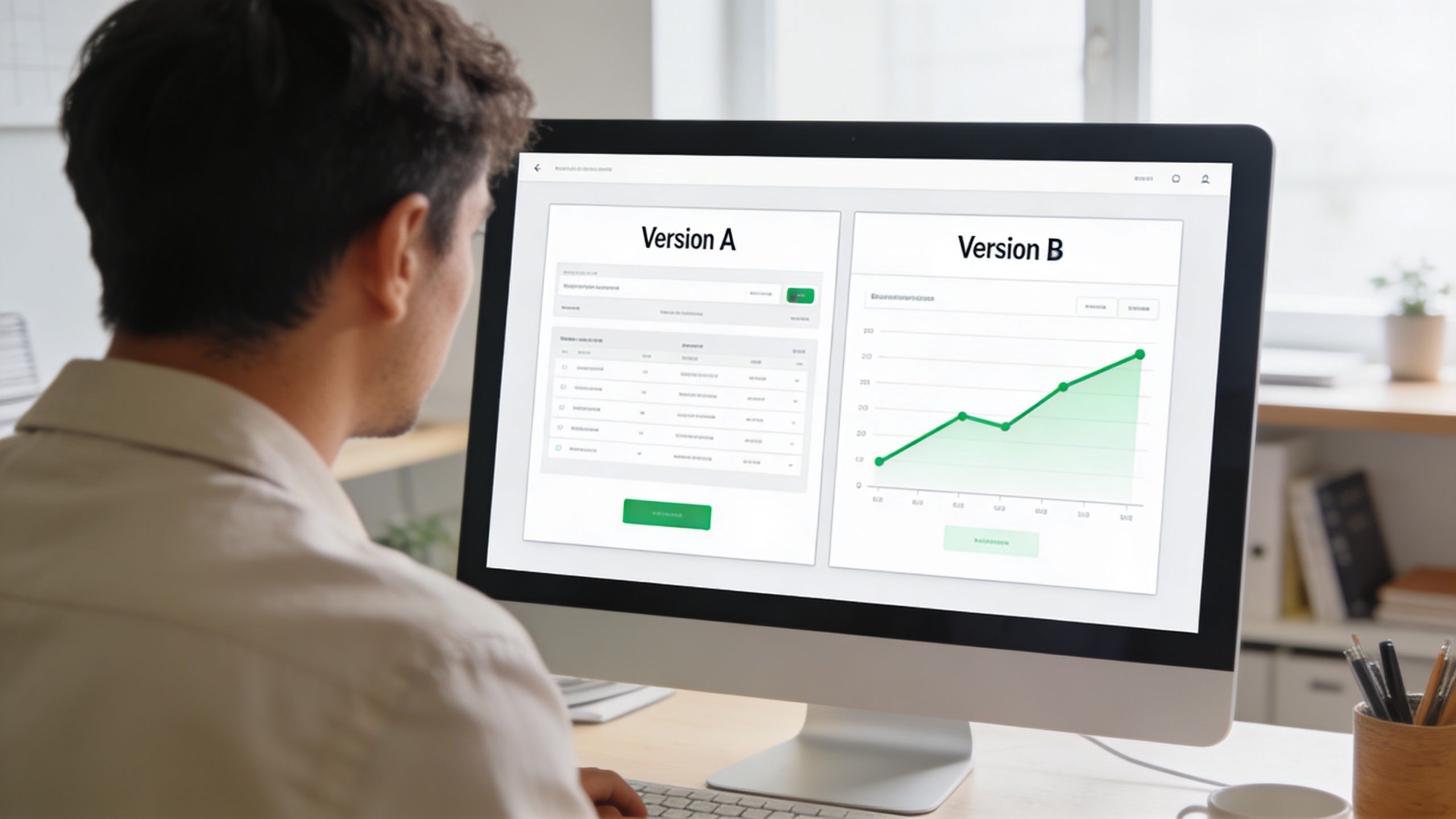
Don't test because you're bored with the page. Test because the data tells you where the sale is breaking.
What to test first
Start with the variables closest to buyer intent.
Headline
This is usually the first lever. Test a tighter promise, a clearer service match, or a more direct offer.Primary CTA
Change the wording, placement, or surrounding context. Sometimes the button isn't weak. The setup around it is.Hero section
Swap generic stock imagery for relevant visuals, product detail, or proof-focused framing.Form structure
Remove unnecessary fields. Simplify labels. Fix mobile usability.
A more disciplined testing process also requires the right campaign and analytics setup. That's where structured A/B testing and ad optimization becomes important, because random changes produce random conclusions.
For a practical walkthrough, this short video is worth your time:
The businesses that improve fastest aren't guessing better. They're measuring better.
Your Instant Landing Page Optimization Checklist
Most pages don't need a full rebuild before you can spot obvious leaks. They need an honest audit.
Run through this table like a yes-or-no scorecard. If you're stacking up “No” answers, your page isn't ready for paid traffic at scale.
Quick audit table
| Element | Check | Yes/No |
|---|---|---|
| Headline | Is the main benefit clear above the fold in one sentence? | |
| Offer clarity | Does the page immediately match the ad or keyword intent? | |
| CTA | Is there one primary action, not several competing actions? | |
| CTA copy | Does the button explain the next step clearly? | |
| Hero section | Does the top of the page show the product, service, or outcome quickly? | |
| Trust signals | Are reviews, credentials, or proof visible near decision points? | |
| Form design | Is the form asking only for essential information? | |
| Layout | Can a visitor scan the page and understand it without effort? | |
| Mobile usability | Are buttons easy to tap and forms easy to complete on a phone? | |
| Speed | Does the page feel immediate on mobile, without heavy visual drag? | |
| Relevance | Does every section support the same single conversion goal? | |
| Distractions | Have you removed navigation clutter and unrelated links? |
A few hard rules make this checklist more useful:
- If the headline is vague, rewrite it first: Weak opening language poisons everything below it.
- If the CTA is passive, fix the ask: The next step should feel obvious and low-friction.
- If mobile feels cramped, redesign before buying more traffic: Local leads often arrive on phones, not desktops.
- If the page contains extra offers, remove them: One page. One goal.
A landing page audit should feel uncomfortable. If it doesn't expose real weaknesses, you're grading your own homework too kindly.
Most business owners can identify the problems once they know what to look for. Fixing them properly is the harder part, because copy, UX, speed, form logic, and analytics all interact. That's why conversion landing pages should be treated like performance assets, not brochure pages with a button added later.
Turn Your Page Into a 24/7 Sales Engine
A conversion landing page should work like a disciplined sales rep who never gets distracted.
It should greet the right visitor, deliver the right message, handle the obvious objections, and ask for the next step with confidence. When that system works, your ads become more efficient, your lead flow becomes steadier, and your website stops acting like an online brochure.
What separates decent pages from profitable ones
Most businesses can build a page that looks acceptable. Fewer can build one that consistently converts qualified traffic.
The difference usually comes down to execution quality in a few places:
- Message match: The ad and page speak the same language.
- Offer structure: The ask fits the visitor's intent stage.
- Technical discipline: Speed, accessibility, and mobile usability are treated as conversion issues.
- Testing culture: Decisions come from results, not opinions.
For businesses also expanding content and video funnels, supporting assets matter too. If you're building awareness on YouTube, for example, resources on how to generate videos and maximize YouTube earnings can help you think more clearly about how top-of-funnel content connects to lower-funnel landing pages and offer pages.
There are also cases where businesses need more than a single page. They need coordinated sequences. A paid search visitor may need a direct quote page. A retargeting visitor may need a proof-heavy page. A colder prospect may need a softer lead magnet or consultation step. That's a funnel decision, not just a page design decision.
The real business decision
At this point, business owners either keep patching pages or start treating post-click performance as a serious growth lever.
Tools can help. Templates can help. Internal teams can improve a lot with the right standards. One option for companies that want done-for-you implementation is Emulous Media Inc, which builds lead generation funnels, conversion-focused websites, and paid traffic systems around UX, speed, analytics, and automation.
The broader point is simple. If your traffic is expensive, your landing page can't be casual.
The median page is ordinary. The stronger page is specific, fast, credible, and tested. That difference shows up in booked calls, submitted forms, completed purchases, and the amount of revenue you can produce before increasing ad spend.
If your ads are getting attention but not enough action, don't assume you need more traffic. You may just need a page that finally does its job.
If you want a second set of eyes on your conversion landing pages, book a free consultation with Emulous Media Inc, call 689-255-6327, or visit the contact page to talk through your goals. A focused review can usually reveal where your page is leaking leads, where your offer is misaligned, and what to fix first.