A lot of good local businesses in Central Florida have the same problem. They do solid work, answer the phone, take care of customers, and still lose leads to a competitor that looks stronger on Google. Not because that competitor is better. Because their Google Business Profile is more complete, more active, and easier for Google to trust.
That matters more than most owners realize. When someone searches for a roofer in Orlando, a med spa in Lake Mary, or a marketing agency near Charlotte, your Google Business Profile often shapes the first decision. People check reviews, hours, services, photos, and whether your business feels current. If your profile looks neglected, they move on before your website ever gets a chance.
If you're trying to figure out how to optimize google business profile for actual leads, not just vanity visibility, the right mindset is this: your profile isn't a listing. It's a local sales asset. It can attract calls, qualify prospects, answer objections, and send stronger buying signals to Google at the same time.
Table of Contents
- Your Google Profile Is Your Digital Front Door
- Building Your Profile Foundation for Local Dominance
- Choosing Categories and Services That Attract Customers
- Using Media and Posts to Showcase Your Brand
- Turning Reviews and Questions into a Trust Signal
- Advanced Tactics for Local SEO and Conversions
- Your GBP Is Optimized, What's Next
Your Google Profile Is Your Digital Front Door
A weak Google Business Profile creates a silent leak in your marketing. You can invest in SEO, paid ads, social media, even a new website, and still lose ready-to-buy searchers because your profile doesn't do enough to convert local intent into action.
That's why treating GBP like a one-time setup job is a mistake. A profile isn't just a map pin with business hours. It's the place where prospects compare you to the shop across town, the contractor with better photos, or the firm with more relevant reviews. In many local searches, that comparison happens fast.
In Orlando and nearby markets like Lake Mary, Sanford, and Winter Park, buyers search with urgency. They want confidence. They want to know whether you serve their area, whether you're open, whether your team looks credible, and whether other customers had a good experience. Charlotte works the same way. Searchers aren't studying your brand story. They're scanning for reasons to contact you now.
Why the profile matters before the website
Your website still matters. It closes the gap after interest starts. But the profile often creates that interest first. Google uses it to decide local relevance, and buyers use it to judge whether you look established or sloppy.
A neglected profile usually shows the same symptoms:
- Wrong or vague categories that attract low-fit searches
- Thin service listings that don't match what buyers want
- Old photos that make the business feel inactive
- Unanswered reviews that signal weak customer care
- Missing questions and answers that force the prospect to keep searching
Practical rule: If a prospect can learn more from your competitor's Google profile than from yours, you're giving away leads.
A properly managed GBP also supports broader search behavior. People don't just type short keywords anymore. They ask more specific questions, compare options faster, and expect direct answers. That's one reason profile optimization pairs well with broader search strategies like answer engine optimization for local intent.
What works and what doesn't
The businesses that win locally usually do a few simple things very well. They keep their information accurate, make their services obvious, show real proof, and update the profile often enough that Google and customers both see activity.
What doesn't work is the lazy version. Keyword stuffing the business name. Uploading a few random images once. Choosing every category that sounds remotely related. Ignoring the profile for months and expecting it to support lead generation.
Your Google Business Profile should function like a compact landing page, trust page, and conversion point rolled into one. When it's handled well, it doesn't just help you appear. It helps you get chosen.
Building Your Profile Foundation for Local Dominance
A business owner in Orlando can spend money on SEO, ads, and social media, then lose the lead because the Google profile shows the wrong hours, sends people to the homepage, or leaves key service details blank. That happens every week. The profile foundation decides whether local search turns into calls or wasted clicks.
Get the basics exact before you do anything clever
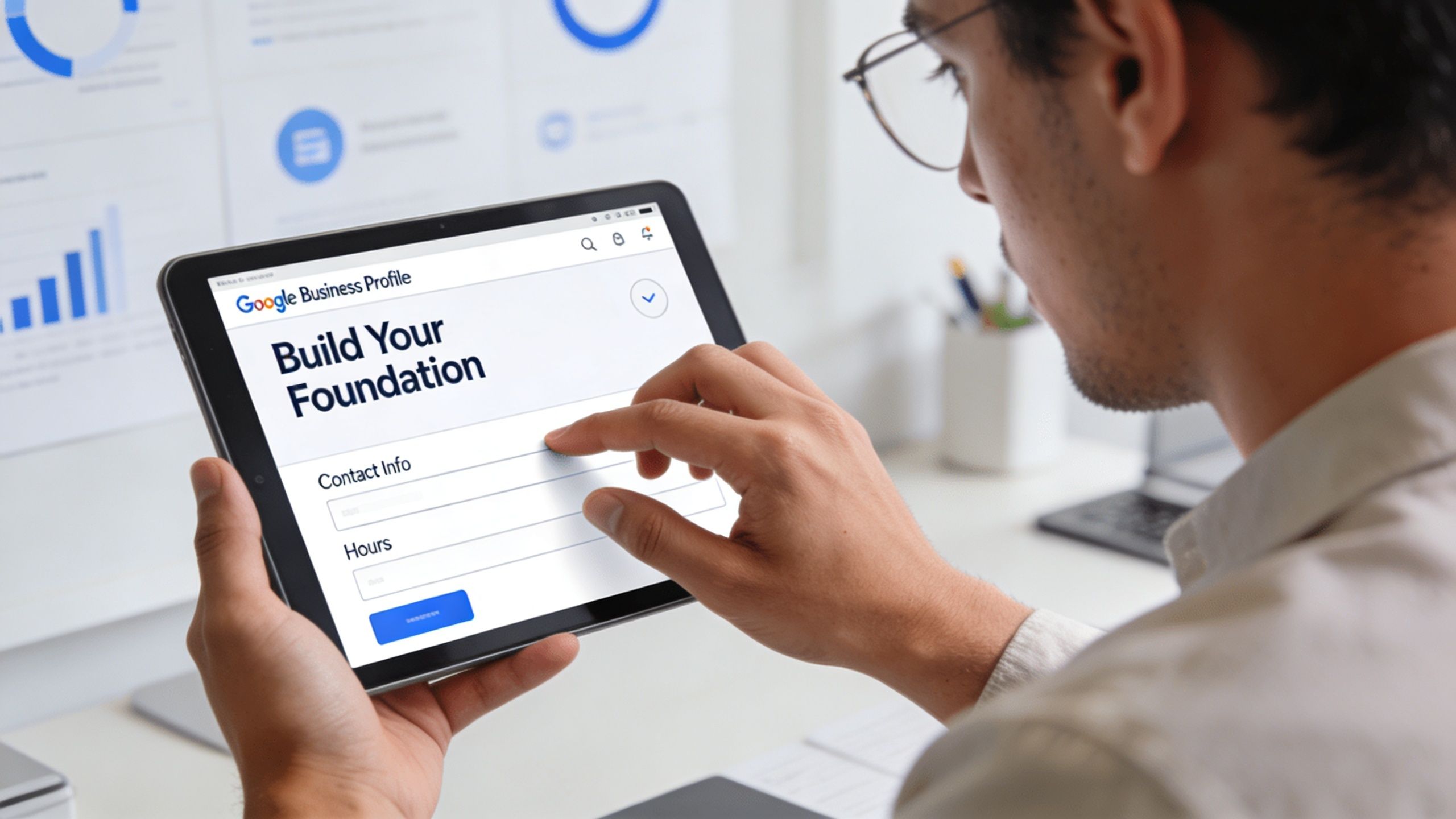
Before posts, photos, or review strategies, the core business data has to be right. If Google sees mixed information across your profile, website, and citations, trust drops. If a customer sees conflicting details, conversion drops.
Start with the fields that affect visibility and lead quality first:
- Business name that matches your real-world branding, with no extra keywords added
- Address or service area based on how the business operates
- Primary phone number answered by your team, not a dead-end line
- Hours that reflect reality, including holiday updates
- Website URL pointing to the most relevant page for the searcher, which is often a service page or location page instead of the homepage
For Central Florida businesses, precision matters more than owners expect. If your website says “Ste 200” and another listing says “Suite 200,” that may look minor. If one directory uses a tracking number and another uses the front desk line, that creates a bigger problem. Google wants a clear, consistent identity. Customers do too.
Service-area businesses need to make a clean choice. If clients do not visit your location, hide the address and define the service area correctly. If you run a staffed office where customers show up in person, publish your business address and keep it consistent everywhere your business appears online.
This work gets stronger when the profile matches the rest of your local search presence. That is why businesses trying to improve map visibility often pair GBP cleanup with local SEO services for Lake Mary businesses so the profile, citations, and location pages support the same market signals.
Write a description that helps a buyer decide
The business description is not there to sound polished. It should confirm three things fast. What you do, where you do it, and why the searcher is in the right place.
Weak descriptions stay vague and waste high-intent traffic. Strong descriptions mirror the language buyers use before they call.
| Weak description | Stronger description |
|---|---|
| Full-service company serving all your needs | Orlando HVAC company providing AC repair, maintenance, and system replacement across Central Florida |
| We offer quality legal support | Family law firm serving Orlando and nearby communities with divorce, custody, and mediation services |
| Marketing solutions for growing brands | Lake Mary marketing agency offering SEO, PPC, website design, and AI automation for local businesses |
A good description should do four jobs:
- State the core service clearly
- Name your service area
- Use buyer language, not internal jargon
- Set expectations before the click or call
That last point matters. A clear description filters weak leads out and helps qualified leads act faster. A Charlotte homeowner looking for kitchen remodeling responds better to specifics than to broad brand language. The same applies to an Orlando law firm, med spa, dentist, roofer, or home service company.
Verification also affects how fast the profile can start working. Google may offer video, phone, email, or postcard verification depending on the business type and profile history. Use the option Google gives you, complete it quickly, and make sure the visible business details match your signage, website, and public records.
Foundation work is not glamorous. It is where local sales momentum starts. When the base information is accurate, aligned, and built around how real customers search, every later improvement has a better chance of producing calls, direction requests, and booked jobs.
Choosing Categories and Services That Attract Customers
A lot of Google Business Profiles underperform for one reason. The business picked categories based on what sounded close enough, then listed services in a way no customer would ever search.
Your primary category shapes the searches you can win
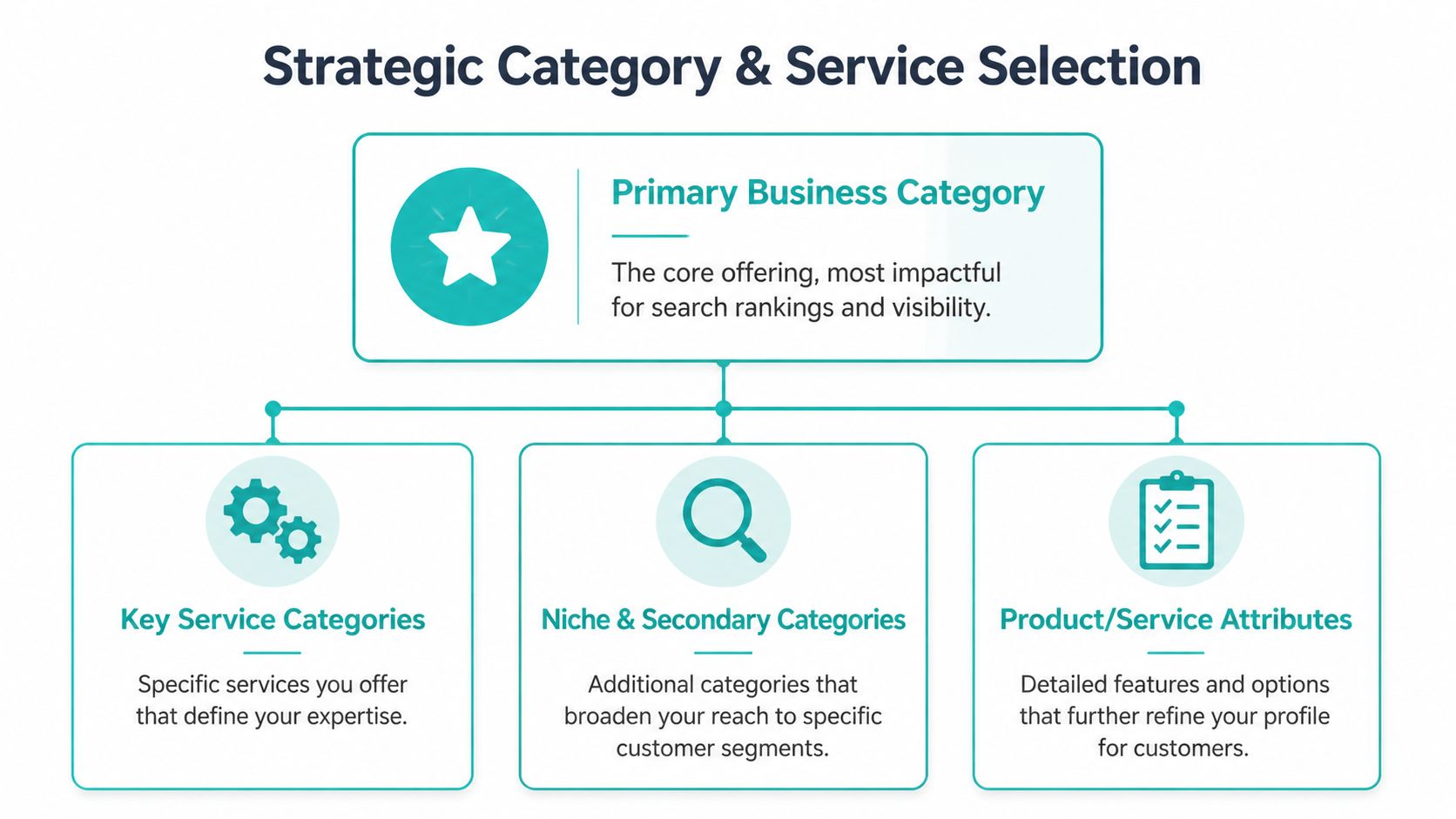
Google treats category selection as a major relevance signal in local search, and businesses can add a primary category plus secondary options through the setup structure outlined in Google's category and profile guidance. The practical move is to choose the category that matches the service you want the most profitable calls for.
That sounds simple. It usually is not.
An Orlando personal injury firm should not lead with a broad legal category if injury work is what drives the firm. A Charlotte remodeling company that makes its margin on kitchens should not hide behind a generic contractor label. A Central Florida marketing agency that sells SEO, paid ads, and websites needs a category that reflects how it gets clients, not how the owner casually describes the business at a networking event.
The category you choose affects visibility, but it also affects lead quality. Ranking for the wrong type of search can fill your phone with poor-fit inquiries, price shoppers, or requests for services you do not even want.
Secondary categories should widen reach carefully
Secondary categories help when they support the primary business model. They hurt when they turn the profile into a grab bag of maybe-services.
I see this often with home service companies around Orlando. A roofer adds categories tied to solar, gutters, siding, general contracting, and restoration because each one sounds like revenue. Then the profile starts attracting mixed-intent searches, and the office spends time sorting through calls that never should have come in.
A tighter setup works better. Pick secondary categories only when all three things are true:
- The service is real and sold consistently
- The business wants more calls for it
- The service is clearly supported on the website and inside the profile
That last part matters more than owners expect. If the profile says one thing and the site says another, Google gets a weaker relevance signal and the customer gets a weaker trust signal.
Services turn visibility into qualified action
The Services section does more than fill space in the dashboard. It helps Google understand what the business offers, and it helps a buyer confirm they are in the right place before they call.
Weak service entries create friction. Strong ones pre-sell.
Compare the difference:
| Generic service label | Better GBP service wording |
|---|---|
| SEO | Local SEO for Orlando service businesses |
| Web Design | Conversion-focused website design for Lake Mary and Orlando brands |
| HVAC | AC repair, maintenance, and system replacement |
| Law | Family law, divorce mediation, and custody representation |
| Home Services | Kitchen remodels, bathroom renovations, and flooring installation |
Good service wording uses buyer language. It reflects how people search when they are close to hiring. A homeowner in Winter Park is more likely to respond to "AC repair and system replacement" than a vague label like "HVAC." A prospect in Charlotte searching for a remodel wants to see the room type, not a catch-all phrase that could mean anything.
Keep the wording natural. Stuffing city names and keywords into every line makes the profile look thin and can weaken trust. Clear, specific phrasing usually does a better job of bringing in the right call.
Category and service choices should match the sales strategy
Experienced management outperforms a quick DIY setup. Anyone can fill out fields. Fewer business owners step back and ask which category supports the highest-margin service, which secondary categories expand reach without lowering relevance, and which service entries help close the lead before the first conversation starts.
A strong setup usually includes:
- One primary category tied to the main revenue driver
- A short list of secondary categories that match real offers
- Service entries written in plain buyer language
- Tight alignment between the GBP, website pages, and actual sales process
That alignment is what turns a profile into part of a local growth system. Categories bring the right search visibility. Services clarify the offer. Better-fit visitors turn into better calls, better appointments, and more booked work.
For Central Florida businesses, that difference is easy to see in practice. A profile built around the right categories and real service intent does not just get found more often. It sends more ready-to-buy people to the phone.
Using Media and Posts to Showcase Your Brand
Someone searches your business on a Tuesday afternoon, compares you with three nearby competitors, and makes a decision in under a minute. In Orlando and Charlotte, that happens every day. If your profile shows outdated photos, no recent updates, and generic graphics, you lose the call before anyone visits your website.
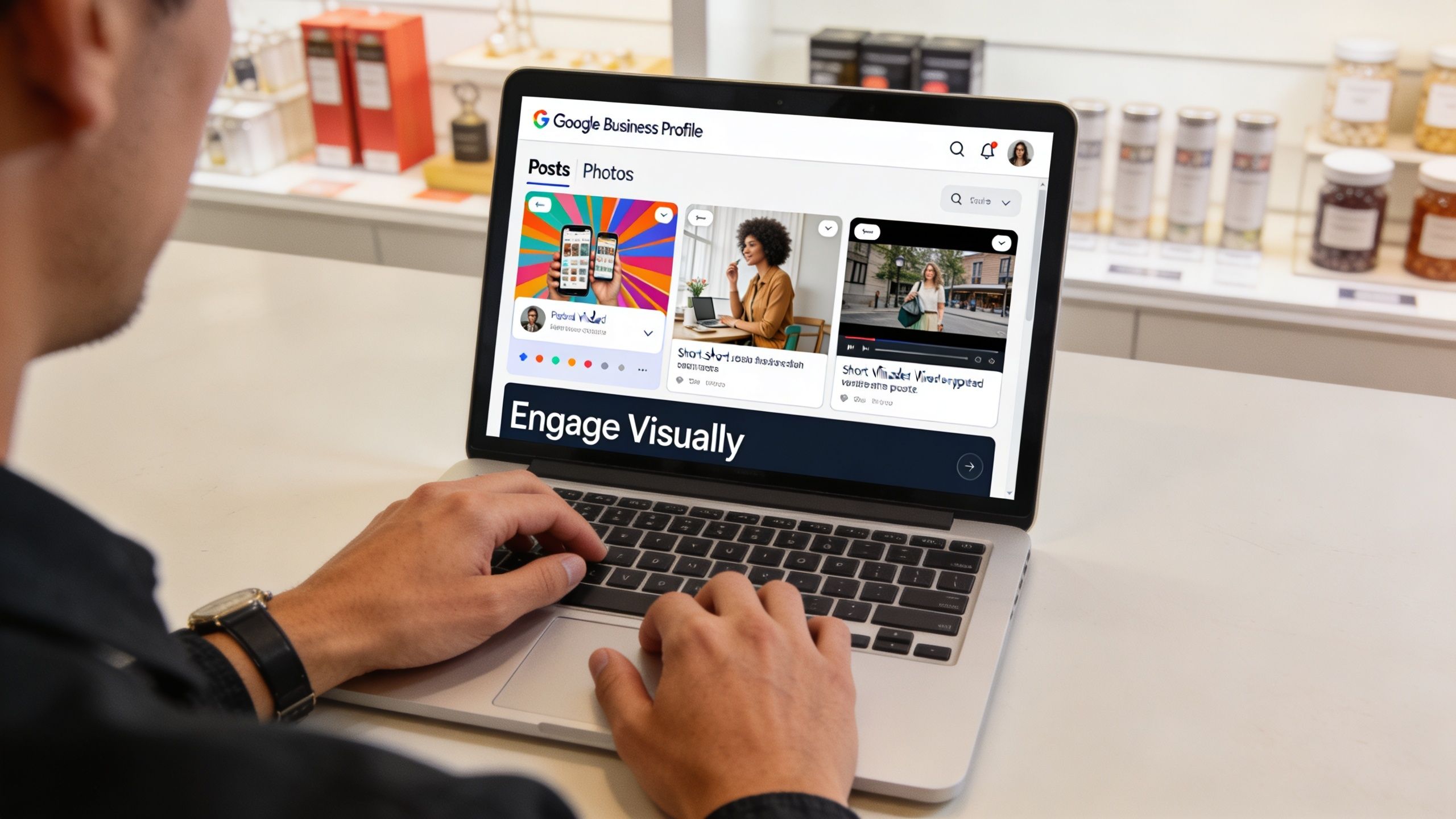
Photos answer unspoken sales questions
Strong media reduces hesitation fast. It helps a prospect answer practical questions without picking up the phone yet. Does this place look legitimate? Is the team professional? Does the work match the price point? Is this business active right now?
That is why photo selection matters more than photo volume. A profile should show the location, the people, the work, and the experience a customer can expect. Random uploads from different years usually hurt more than they help.
For a local service business, the photo mix should usually include:
- Exterior shots so customers can spot the building or service area presence
- Interior shots that show the business is established and well-kept
- Team photos that put real faces behind the brand
- Service-in-progress photos that show how the work gets done
- Brand-consistent images that match the website, social ads, and overall positioning
The right mix depends on the sale. An Orlando med spa should show clean treatment rooms, front desk presentation, and staff photos that feel polished and current. A Charlotte roofing contractor should show branded trucks, crews on-site, before-and-after work, and completed roof lines from street level. A law office needs sharp office and attorney photography, not stock-style filler that makes the firm feel interchangeable.
Poor media creates friction. Blurry jobsite photos, old staff headshots, dim interiors, and cluttered graphics make the business look neglected. That affects conversions directly because prospects often read visual quality as a signal of service quality.
Posts should support revenue, not fill space
Google Posts work best when they are tied to what you want the phone to do. A business owner posting once in a while for the sake of activity rarely sees much from it. A business using posts to support seasonal demand, promote higher-value services, and answer buying objections gives people a reason to act now.
Good posts are short, local, and specific. They should point to an offer, service, event, or update that matters to someone ready to book.
Useful post topics include:
- Seasonal services such as summer AC tune-ups in Orlando
- Promotions or limited-time offers with a clear next step
- New service announcements that expand what the business can sell
- Events or community involvement that build local familiarity
- Operational updates that remove doubt, such as new hours or a second location
An HVAC company in Central Florida can use posts to push indoor air quality services before storm season. A family law firm in Charlotte can post about consultation availability, office updates, or a new attorney joining the team. A retail business can highlight new arrivals, in-store events, or top-selling products with a direct call to visit.
Posts also support how people search now. Many local searches are spoken into phones and phrased as immediate needs. Writing updates in clear, natural language helps your profile stay aligned with how customers ask for nearby solutions. This matters even more if your broader local strategy includes voice search optimization for service-area businesses.
Here's a useful visual walkthrough of the profile interface and update flow:
Consistency matters here.
A neglected profile tells prospects the business may be slow to respond, hard to reach, or loosely managed. A current profile with recent photos and relevant posts signals the opposite. It shows operational life. It shows attention to detail. It gives a buyer one more reason to call you instead of the company two listings down.
This is also where DIY work often falls short. Uploading a few photos is easy. Building a media and posting rhythm that matches seasonality, supports higher-margin services, and reinforces your local brand takes planning. Agencies that track profile performance alongside reviews, calls, landing pages, and tools shaped by white label reputation software trends usually get more from the same profile because every update serves a sales purpose.
Turning Reviews and Questions into a Trust Signal
Reviews and Q&A shape two decisions at once. Google uses them as relevance and prominence signals. Prospects use them to judge risk. If your profile has weak review activity or unmanaged questions, people hesitate.
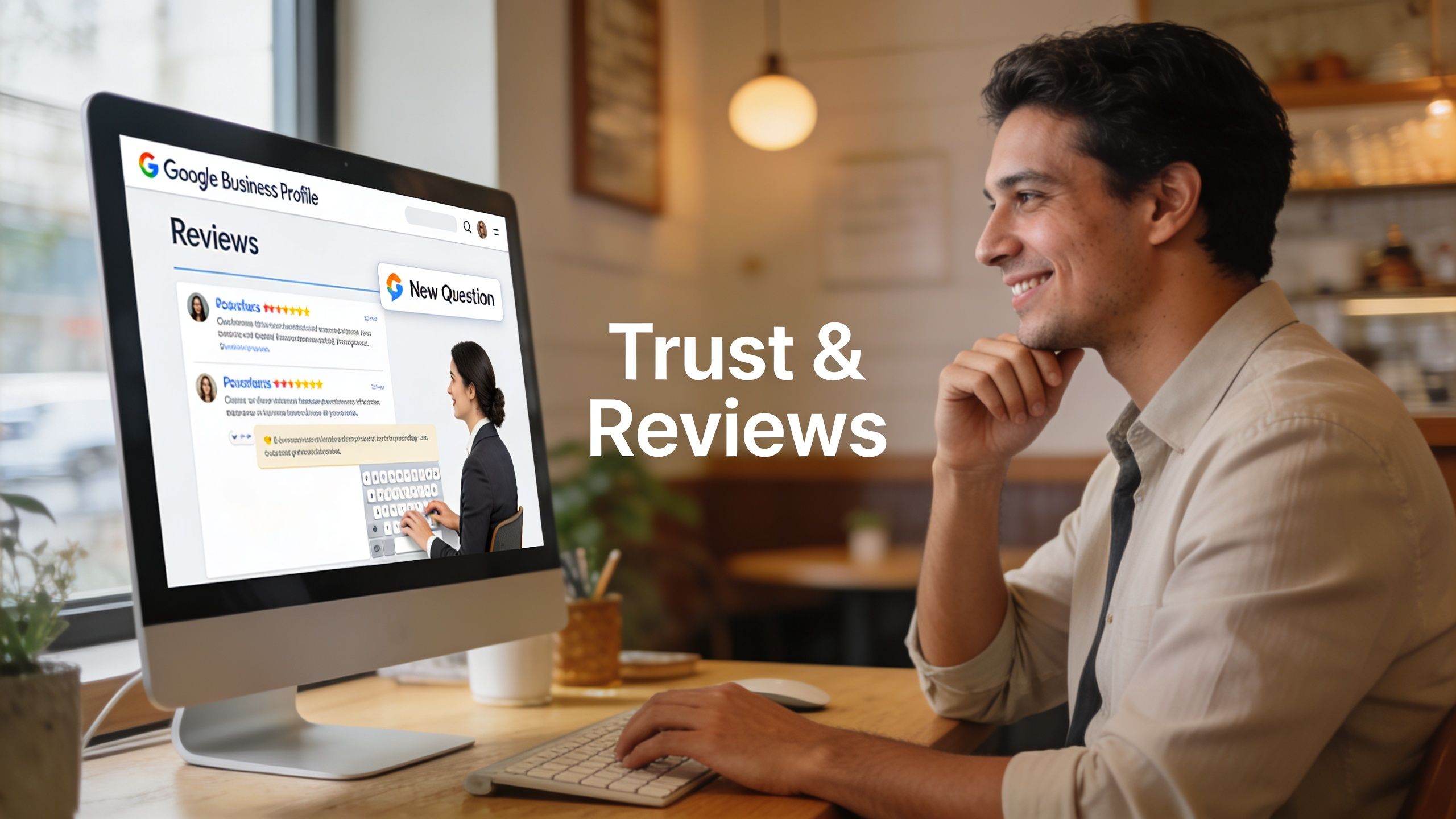
Reviews influence both trust and visibility
Businesses with 4+ star ratings and 20+ reviews appear up to 3x more frequently in Google's local pack, and businesses that actively manage reviews see 10 to 15 percent higher engagement rates, according to this Google Business Profile review and Q&A guide. The same guidance notes that replying to every review within 24 to 48 hours using natural keywords reinforces SEO.
That should change how you think about reviews. They're not a vanity metric and they're not only for reputation. They're part of local visibility.
A healthy review process usually has three parts:
- A clear ask sent shortly after the service or purchase
- A fast response habit for every review, good or bad
- Useful language in replies that naturally references services or locations
For example, if a customer praises your website design work in Orlando, your response can acknowledge the result and mention the service naturally. No stuffing. No robotic template.
A response system beats occasional replies
Business owners often answer reviews when they remember. That's not a strategy. It's a mood.
A stronger process uses templates, assigns ownership, and keeps the tone consistent. If the owner isn't handling it, a team member or agency should. Some businesses also use software to systemize requests and monitor patterns. If you're comparing platforms, this roundup on white label reputation software trends is a practical starting point because it shows how reputation workflows are evolving without turning the process into fake automation.
What works:
- Ask soon after delivery while the experience is fresh
- Make the review link easy to access
- Reply to every review with a real sentence, not a copy-paste block
- Address negative feedback calmly and move resolution offline when needed
What doesn't:
- Begging only happy customers
- Ignoring critical reviews
- Buying reviews
- Using keyword-heavy canned replies that sound unnatural
If every response sounds machine-written, the profile loses credibility even when the words are technically correct.
Use Q and A to remove friction before the call
The Q&A section is one of the cleanest ways to pre-handle objections. Most businesses leave it empty and let customers ask random questions whenever they want. A better approach is to seed it with common, useful answers.
Think about the questions that delay a call:
- Do you serve my area?
- Do you offer consultations?
- What kinds of projects do you take on?
- How quickly can someone get started?
Answering those publicly makes the profile more useful and reduces uncertainty. It also supports the way people now search and speak to devices, which is why this pairs naturally with voice search optimization for local businesses.
The combination matters. Reviews prove other people trust you. Q&A proves your business is organized and transparent. Together, they turn the profile into a stronger trust signal before anyone ever reaches your contact form.
Advanced Tactics for Local SEO and Conversions
Most businesses stop at completion. They claim the profile, add a logo, choose categories, collect a few reviews, and assume they're done. That's enough to exist. It isn't enough to compete.
Most businesses stop too early
A more advanced profile strategy connects GBP to the rest of your lead generation system. That includes your website, analytics, call handling, local landing pages, and follow-up process.
One overlooked move is using the Products feature even when you sell services. A service business can use product-style listings to spotlight signature offers, featured packages, or high-margin solutions. The goal isn't to mimic ecommerce. The goal is to make high-intent offers more visible.
Another overlooked move is tightening citation consistency outside Google. If your profile says one thing and your directory ecosystem says another, local trust weakens. That's not glamorous work, but it supports the rest of your local visibility.
A more technical layer also matters. Structured website content, strong local landing pages, and consistent geographic messaging help the profile perform better because Google can validate what the business claims.
Track what the profile actually produces
Understanding profile generation often separates amateurs from professionals. If you don't know what your profile generated, you can't improve it with confidence.
According to this GBP conversion and UTM tracking guide, weekly Google Posts with clear CTAs can yield a 1 to 3 percent click-through rate, and integrating GBP with GA4 via UTMs has been shown to result in 20 percent traffic growth from the 750-character profile description alone. The same guidance recommends using AI tools to generate SEO-optimized service descriptions.
That means your profile links shouldn't just point to a website. They should point to tagged URLs that let you identify traffic, behavior, and downstream conversions inside GA4. Once you can separate GBP traffic from other traffic, your decisions improve fast.
Here are the metrics that matter most:
| Metric | What it tells you |
|---|---|
| Website clicks from GBP | Whether the profile drives deeper interest |
| Calls from GBP | Whether local searchers are ready to act |
| Direction requests | Whether location intent is strong |
| Landing page behavior | Whether the traffic is qualified |
| Form submissions after GBP visits | Whether the profile is producing leads |
If calls matter to your business, it's worth understanding what happens after the phone rings. This guide on understanding inbound calls is useful because it frames phone leads as part of a broader conversion system, not just a front-desk task.
For businesses that want help managing this at a higher level, options include internal marketing teams, standalone local SEO platforms, and agency support such as proof-focused local SEO work. The right choice depends on whether you need setup help, ongoing management, or full attribution across SEO, paid ads, and website conversions.
Your GBP Is Optimized, What's Next
An optimized profile isn't the finish line. It's the operating system for local visibility. If you want steady lead flow, the profile needs attention, not just setup.
That means reviewing insights, updating services when your offers change, adding new photos, posting regularly, answering reviews, and watching whether calls and clicks come from the right searches. A profile can drift out of alignment faster than most owners expect. Hours change. Staff changes. Service areas expand. Competitors get sharper.
The bigger opportunity is connecting GBP to the rest of your local growth system. A strong profile can support organic search, paid traffic, landing pages, and even Local Services Ads strategy when you want to own more of the local results page. That's when your map presence stops being a standalone asset and starts acting like part of a coordinated lead machine.
Most business owners can handle pieces of this. Few have the time to manage it consistently while also running operations, sales, staffing, and customer service. That's where execution usually breaks down. The profile gets updated in bursts, then ignored until leads slow down again.
If you've read this far, you already know more than most businesses applying random GBP tips. The next step is consistency. That's what turns a decent profile into a reliable source of calls and customers.
If you want a second set of eyes on your Google Business Profile, Emulous Media Inc can review what’s helping, what’s hurting, and where your local profile should connect more tightly to your website, SEO, ads, and conversion tracking. To start the conversation, book a free consultation, call 689-255-6327, or visit the contact page on the website.