Your website gets traffic. Your social posts reach some people. Your emails land in inboxes that are already crowded. Then a visitor leaves without buying, booking, or calling, and you have no direct line back to them unless they gave you an email address or followed you somewhere.
That gap is where many businesses lose easy revenue.
The answer to what is push advertising isn't “those annoying pop-ups on a phone.” Done badly, that’s exactly what it becomes. Done well, push advertising gives you a direct, consent-based communication channel to people who already showed interest in your business. For e-commerce stores, that can mean recovering abandoned interest before it disappears. For service businesses in Central Florida or Charlotte, it can mean getting in front of the right prospect at the right local moment instead of waiting for them to come back on their own.
Push advertising works best when you treat it like infrastructure, not a gimmick. It isn't about sending more alerts. It's about building a list of opted-in prospects and customers you can reach quickly, clearly, and without relying entirely on social algorithms or overcrowded inboxes.
Table of Contents
- The Difference Between an Alert and an Opportunity
- How Push Advertising Technology Works
- Web Push vs App Push and Key Business Use Cases
- Push Ads vs Email Display and Social Media
- Best Practices for Campaigns That Convert
- Implementing Your First Push Advertising Campaign
- Turn Your Website Visitors into Loyal Customers
The Difference Between an Alert and an Opportunity
A customer gets two notifications in the same afternoon.
The first says nothing useful. It’s generic, off-topic, and lands at the wrong time. The customer dismisses it without reading. After enough of those, they stop trusting the brand behind them.
The second is different. A local HVAC company sends a notification that a technician is on the way. An online store alerts a shopper that the product they viewed is back in stock. A dental office reminds a patient about an open appointment slot tomorrow. That message feels less like spam and more like service.
That difference is the primary starting point for understanding what is push advertising.
Push advertising is a way to send promotional or operational messages directly to a person’s device after they’ve agreed to receive them. The channel is direct, but the value depends on judgment. If the message helps the user act on existing intent, it creates momentum. If it interrupts without relevance, it creates resistance.
Practical rule: The best push campaigns don’t feel like campaigns. They feel timely, useful, and easy to act on.
Local businesses have an advantage here because relevance is often easier to define. A med spa in Orlando can notify nearby prospects about a same-week opening. A law firm can send updates tied to a consultation request. A retailer can alert shoppers to a limited promotion that matches prior browsing behavior.
The mistake is treating push like a louder version of email. It isn't. It sits closer to a priority lane. That’s why the standard has to be higher.
Three traits usually separate an opportunity from an annoyance:
- Clear intent match: The message connects to what the person already viewed, requested, or subscribed to.
- Strong timing: The notification arrives when action is still likely, not days after interest faded.
- Low friction: One tap should take the user to the exact page needed to buy, book, confirm, or respond.
Businesses that understand those trade-offs don't just send alerts. They build a communication asset.
How Push Advertising Technology Works
Most business owners don’t need a deep engineering explanation. They need to know why the channel works and why it behaves differently from email, display, or social.
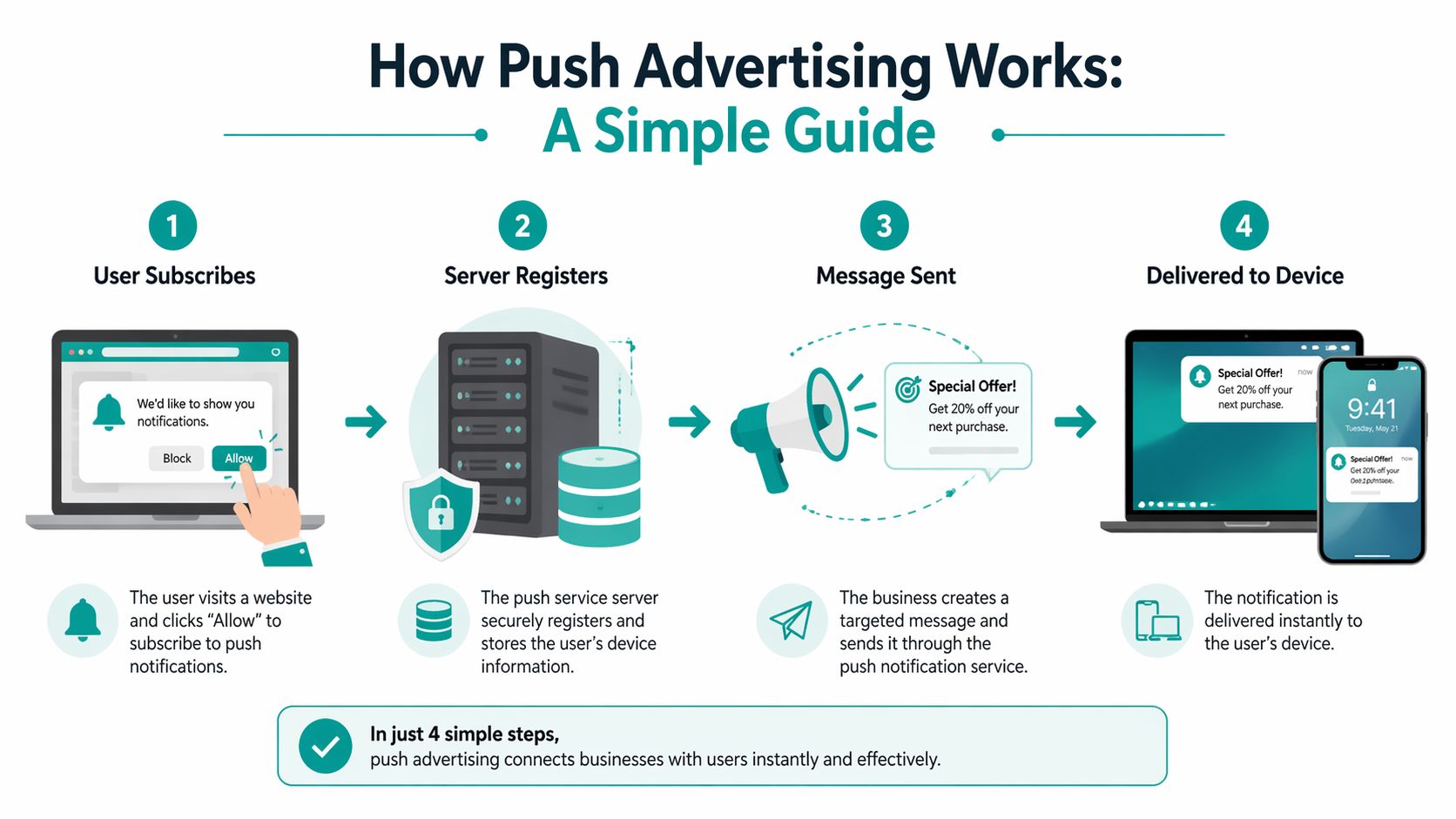
The simplest way to think about push advertising is this: a visitor gives your brand a VIP pass to their browser or app notifications. They opt in first. After that, your platform can send messages through a push service that routes the notification to that user’s device.
Consent creates the channel
Push advertising runs on a permission-based model. The user explicitly opts in before receiving messages, which is a big reason the traffic quality tends to be stronger than channels that interrupt cold audiences. According to P4P Partners’ overview of push advertising, push notifications can reach an average opening rate of 90%, show a 50% performance increase over email marketing in terms of reach, and work independently of ad blockers because they’re consent-based.
That matters for two reasons.
First, you aren't paying to shout at people who never asked to hear from you. Second, you aren't relying on the same visibility rules that affect banners and other display placements. A person either subscribed or didn’t. That clarity makes planning easier.
Push works best when the opt-in is earned. If the value proposition is weak at signup, the list quality drops before the first campaign even launches.
On the technical side, the subscription is registered server-side. That means the system stores the permission and delivery details needed to send future notifications through the browser or app environment. If you already understand programmatic advertising and real-time bidding with AI, the useful comparison is this: push gives you a more direct owned-permission layer, while programmatic buys access to audience attention across outside inventory.
What actually gets delivered
A push notification is small, but it still has structure. The message usually combines four parts:
- Main image: The visual that gets attention fast.
- Icon: Brand recognition in a compact format.
- Headline: The part that has to carry the core promise.
- Message text: The short supporting detail that creates urgency or context.
Because the format is compact, weak creative fails quickly. Vague copy gets ignored. Generic promotions blend together. Strong push creative is specific and built for immediate action.
For a local roofer, “Storm inspection slots open this week” is stronger than “Check out our services.” For an online store, “Your saved item is back” is stronger than “New deals available.”
The technology is simple enough to understand, but execution still decides whether the channel becomes profitable.
Web Push vs App Push and Key Business Use Cases
Not all push advertising works the same way. Businesses often lump everything together, then choose the wrong setup.
The main split is web push versus app push. The distinction matters because the audience behavior, implementation path, and business use cases are different.
Where web push fits best
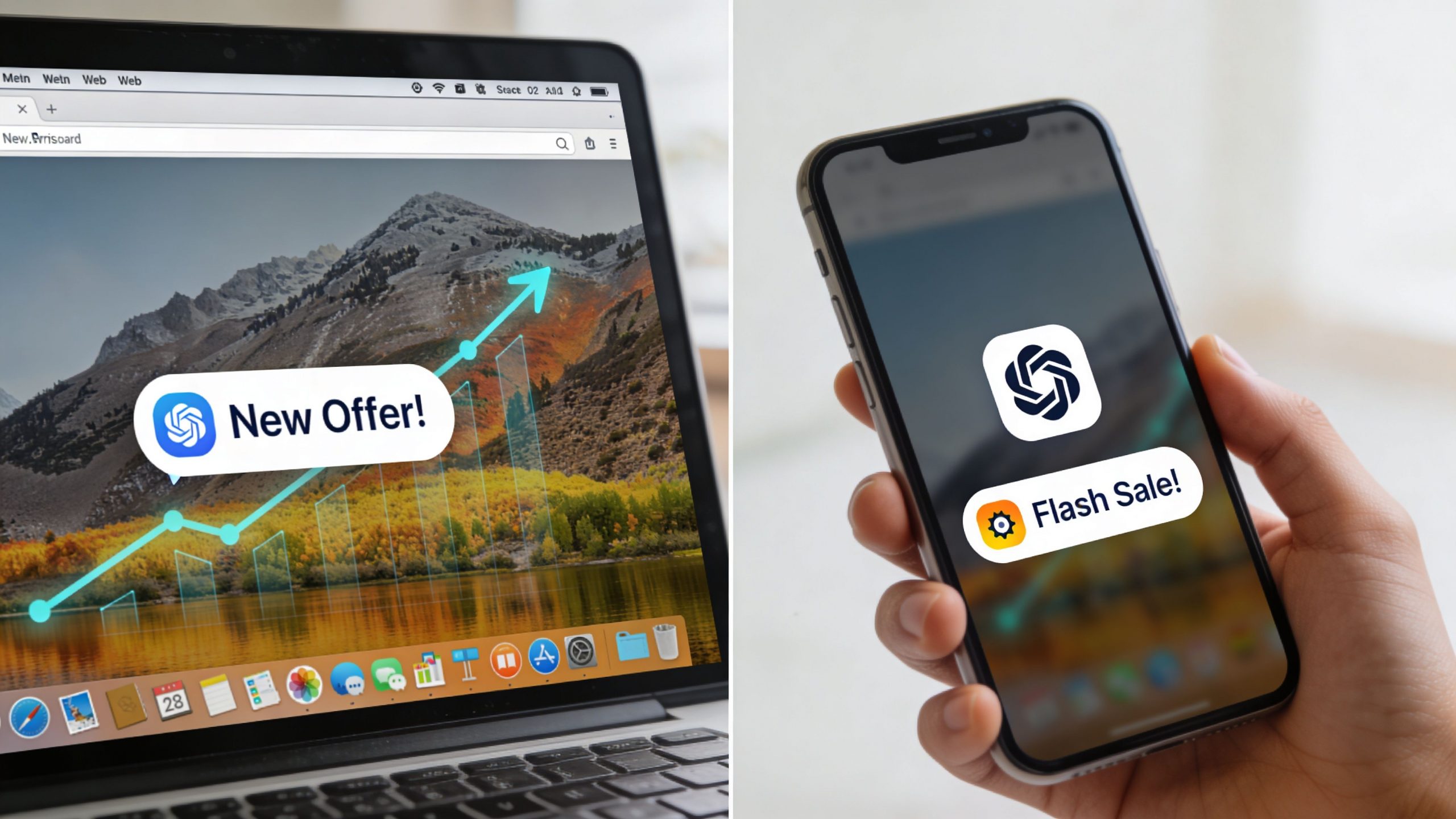
Web push is browser-based. A visitor lands on your site, opts in through the browser prompt, and can then receive notifications without installing an app. For most small and mid-sized businesses, this is the faster starting point because it turns website traffic into a reusable audience.
That’s one reason push has become more attractive as a growth channel. The broader mobile advertising market, where push ads are a significant component, was valued at $262.84 billion in 2025 and is projected to reach $322.67 billion by the end of 2026, according to Epom’s push advertising analysis. The same source notes that businesses using personalized push advertising see up to a 20% increase in customer spending, with push ad click-through rates between 2% and 8%, while web push notifications range from 15% to 30%.
For e-commerce, web push usually supports:
- Abandoned browse recovery: A shopper looked at a product, left, and needs a reminder with a direct link back.
- Back-in-stock alerts: High intent, clear relevance, and short path to purchase.
- Flash sale announcements: Best when the offer is real and time-sensitive.
- Category-based promotions: Useful if subscribers have shown interest in a product type, brand, or seasonal collection.
For service businesses, web push can support local action tied to geography. If you’re running regional campaigns, programmatic geofencing and location ads pair well with push because they help identify where interest is developing, then push helps you stay in front of those opted-in users.
Where app push makes more sense
App push works inside the ecosystem of a mobile app the customer already installed. It’s often stronger for retention and ongoing engagement than for first-touch acquisition.
Use cases tend to be more operational and behavior-based:
- Appointment reminders: Medical, beauty, fitness, and home service brands can reduce missed appointments and last-minute confusion.
- Status updates: “Your order is out for delivery” or “Your technician is arriving soon.”
- Usage prompts: SaaS products, membership platforms, or loyalty apps can bring users back to a feature they haven’t used.
- Replenishment reminders: Good for recurring products and subscriptions.
If you’re building a mobile app roadmap, this overview of mobile app marketing strategies is a useful companion because it connects app adoption, retention, and communication planning in a practical way.
A simple rule helps here. If your business has strong website traffic but no meaningful app adoption, start with web push. If your app already plays a central role in customer experience, app push can become a retention engine.
Push Ads vs Email Display and Social Media
Push advertising works best as part of a channel mix, not as a replacement for everything else. But it does solve a problem that keeps getting worse: businesses are trying to reach warm audiences on platforms they don’t fully control.
Email still matters. Social still matters. Display still matters. Each has a role. The issue is visibility, timing, and how much friction sits between your message and the customer.
Why push stands out
Push advertising delivers messages directly to devices regardless of what the user is doing, which is the core advantage described in Passion Digital’s push and pull marketing overview. That same source notes that this directness helps solve a simple business problem: people can’t buy what they don’t know exists. It also points out that push creates stronger memorability than banner ads and that the consent-driven model improves user experience while supporting better conversion performance.
That combination matters in real campaigns.
Email often struggles because inboxes are crowded and sorting systems decide what gets seen. Display ads fight banner blindness and visibility issues. Social media gives you reach, but the relationship is rented. If the platform changes the rules, your organic visibility can disappear overnight.
If you want a better sense of where email still shines and where it needs support, this Email Marketing Guide is worth reviewing. Email is powerful for deeper storytelling and automation. It’s just not always the fastest or most visible way to trigger immediate action.
If the goal is urgency, push usually beats channels that require the user to go looking for your message.
Push advertising vs other digital channels
| Channel | Visibility | Deliverability | Average CTR | Immediacy |
|---|---|---|---|---|
| Push advertising | High on subscribed devices | Strong because it’s permission-based | Varies by setup and audience | Immediate |
| Often limited by inbox competition | Can be affected by filters and engagement history | Varies widely | Moderate | |
| Display ads | Often weak because users ignore placements | Can be blocked or skipped | Usually lower-intent traffic | Fast but easy to miss |
| Social media | Depends on platform feed exposure | Limited by algorithms and audience behavior | Varies by format and campaign | Fast but inconsistent |
Push is not the best channel for long-form persuasion. Email handles that better. Social can still build awareness and community. Display can expand reach.
What push does better is create a fast-response lane for opted-in users. If you already have lifecycle email workflows, pairing them with email marketing and automation systems gives you a more balanced communication stack: email for depth, push for speed.
Best Practices for Campaigns That Convert
Push advertising is unforgiving. The message is short, the interruption is immediate, and the user decides in a second whether your brand is useful or disposable.
That’s why the best campaigns are built with discipline, not enthusiasm.
Creative and timing
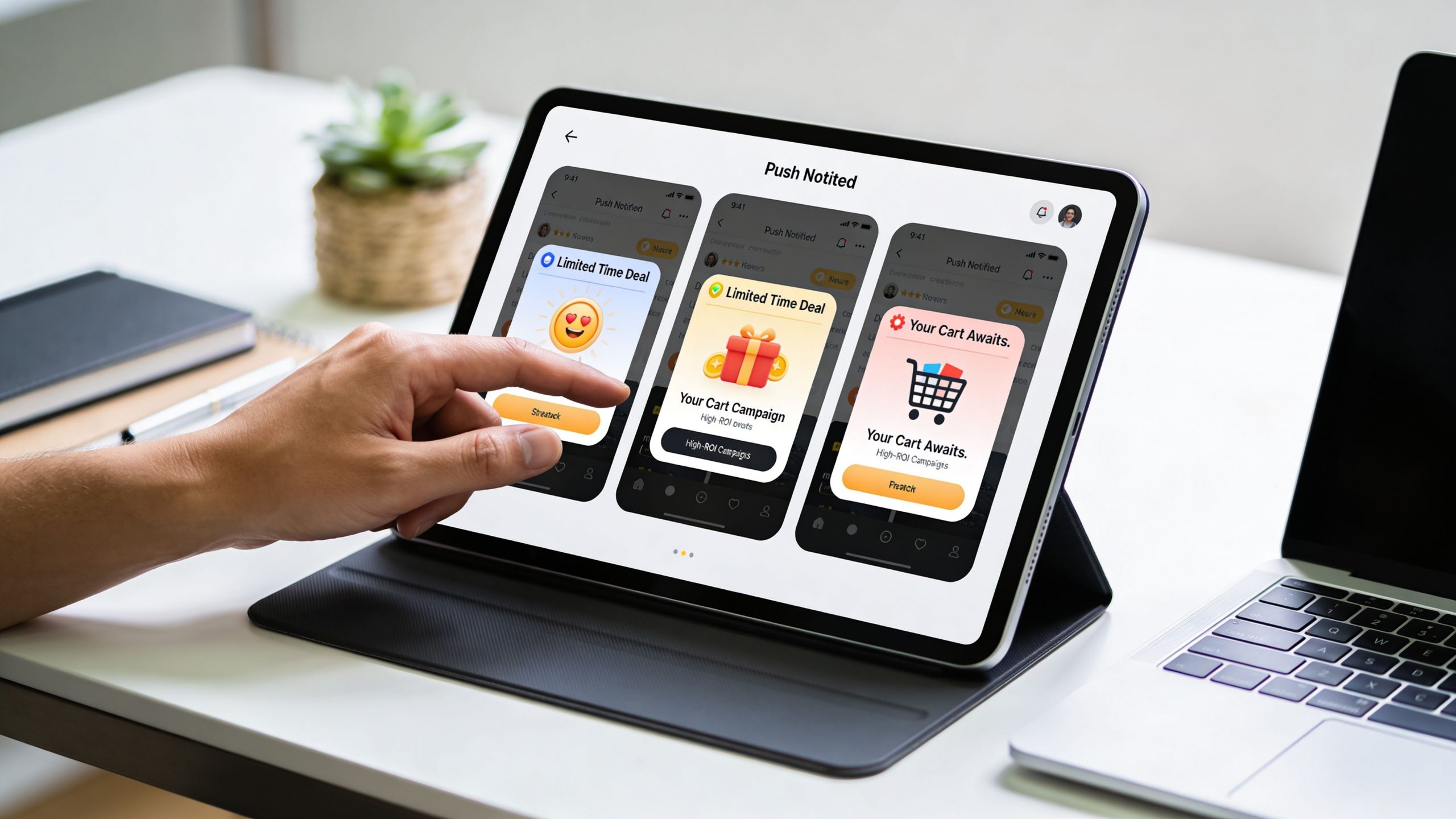
Bad push creative sounds like lazy ad copy compressed into fewer words. Good creative does one job well. It gets attention and gives the user a reason to tap now.
Start with the mechanics:
- Headline first: If the headline is vague, the rest won't save it.
- Use the image with intent: Show the product, service, or context. Don’t decorate.
- Write for action: “Confirm appointment,” “View your offer,” or “Back in stock” beats abstract branding language.
Timing matters just as much as copy. According to AdMaven’s push stats and tactics article, afternoon and evening delivery achieves 60% delivery rates, and Tuesday generates the best reaction rates. The same source reports that the average U.S. smartphone user receives 46 app push notifications daily, which is exactly why random scheduling performs poorly.
When businesses ask why push failed, timing is often part of the answer. They sent a reasonable message at a useless moment.
Segmentation personalization and restraint
Generic push is usually a waste.
AdMaven reports that advanced targeting improves reaction rates by 300% and personalization improves reaction rates by 400%. The same source says geotargeting doubles conversion rates from 1.5% to 3.8% when implemented well, and that 85% of marketers now use segmentation. For local businesses, especially in markets like Central Florida or Charlotte, push stops being a broadcast tool and starts acting like a revenue tool.
That means separating audiences such as:
- New subscribers: Send a welcome message with one clear next step.
- Repeat customers: Focus on reorder prompts, loyalty offers, or service follow-ups.
- Cart or lead abandoners: Bring them back to the exact action they left unfinished.
- Local segments: Tailor promotions by city, service zone, or store radius.
Frequency is where many businesses damage the channel. AdMaven notes that sending one push notification per week can cause 10% of users to disable notifications and 6% to uninstall apps. Push isn’t email. You can’t keep tapping the audience on the shoulder just because the tool makes it easy.
Field note: If every message feels urgent, none of them are.
For location-based businesses, geotargeted campaigns should connect directly to a landing page or booking path. If you’re investing in conversion rate optimization for landing pages and funnels, push becomes more profitable because the post-click experience is just as focused as the notification itself.
Here’s a practical example. A Central Florida med spa shouldn’t send one message to its entire database. It should send a different notification to first-time visitors who viewed injectables, returning clients due for a follow-up, and users within a specific service radius who showed recent interest.
A quick walkthrough helps if you're building campaigns in-house:
Measure what happens after the click
A high click-through rate can still produce weak business results if the landing page is poor, the offer is mismatched, or the audience was segmented badly.
Track the full path:
- Opt-in source: Which page or offer generated the subscriber?
- Message engagement: Which headline, image, and send time earned the click?
- On-site action: Did the user buy, book, call, or bounce?
- Retention behavior: Did they stay subscribed and keep engaging?
The strongest push programs treat every notification like a hypothesis. Not a blast.
Implementing Your First Push Advertising Campaign
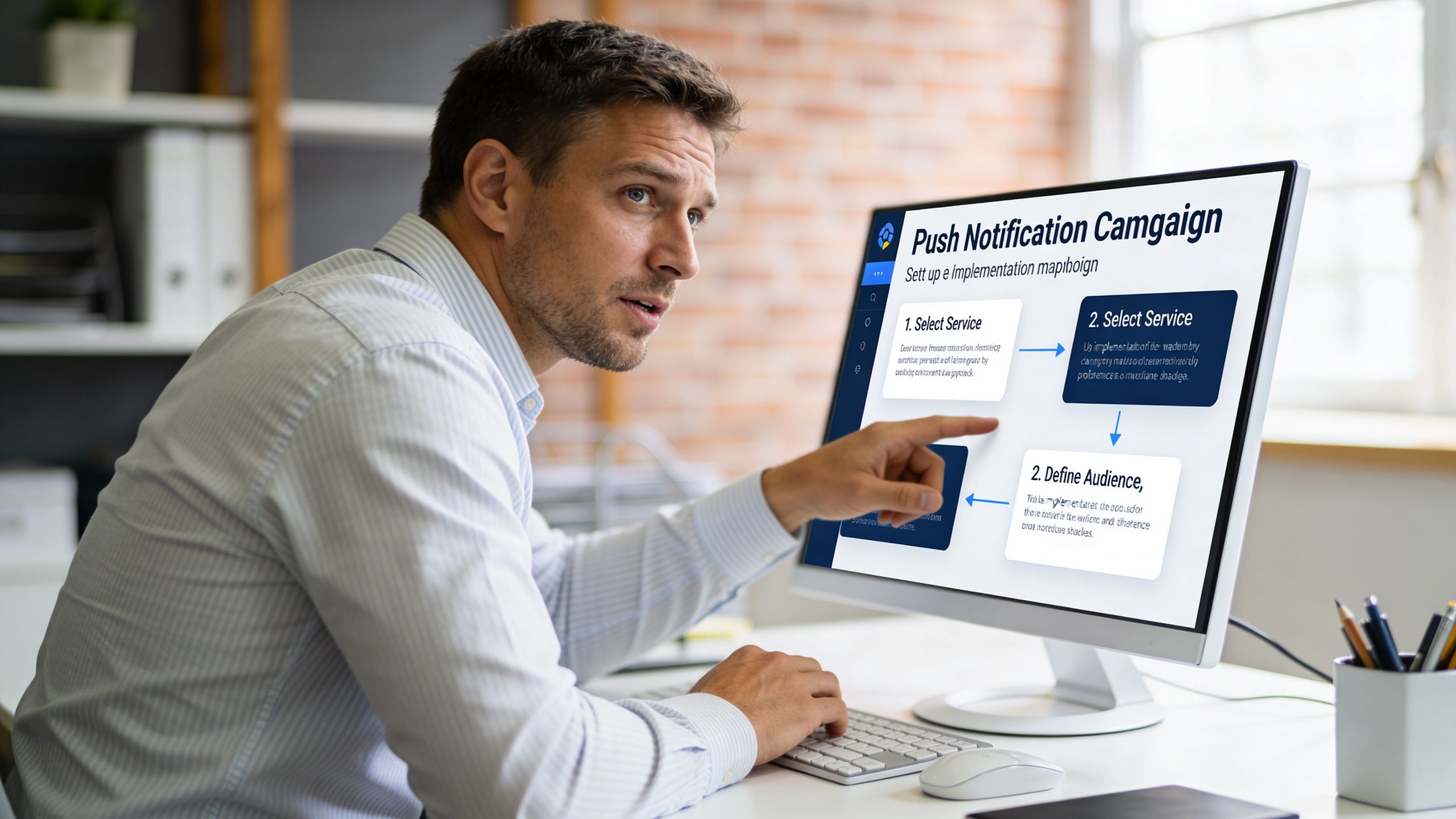
Most businesses don't need a huge rollout. They need one clean setup that proves the channel can produce revenue without damaging trust.
A smart first campaign is small, specific, and tied to a real business objective.
Start with the right system
Choose a platform that fits your stack. Businesses often look at tools such as OneSignal, PushEngage, WonderPush, or a push feature inside a broader CRM or ecommerce platform. The best choice depends on how your site is built, how much automation you want, and whether you need behavior-based triggers, segmentation, and location logic.
Before you pick anything, answer three questions:
- What event should trigger the first message
- Where should the click land
- Who should never receive that message
If those answers are fuzzy, the tool won’t fix the strategy.
Integration matters more than commonly assumed. Your push platform should connect cleanly with your website, analytics, ecommerce data, booking flow, or CRM. If your site experience is already fragmented, push can expose those problems fast. A message that promises one thing and lands on a slow or confusing page will waste attention.
This is also why push should fit into the larger lead journey. If your business already relies on lead generation funnels for service and ecommerce growth, push should support the funnel stage, not interrupt it with disconnected offers.
Build one simple automation first
Your first workflow should be easy to understand and easy to measure.
For an e-commerce business, a practical starting point is a welcome sequence for new web push subscribers followed by a product-view reminder tied to category interest. For a service business, start with a new subscriber welcome message, then add one follow-up tied to consultation intent, booking completion, or appointment reminders.
A simple launch roadmap looks like this:
Create the opt-in offer
Make the value obvious. Early access, useful updates, back-in-stock alerts, or appointment notifications work better than generic “stay informed” language.Set subscriber rules
Separate new visitors, repeat visitors, active customers, and recent converters. Don’t message everyone the same way.Write one core message
Keep it short, specific, and tied to a real action.Choose the destination
Send the click to the exact product, service, or form page. Not the homepage.Review local opportunities
A Central Florida event, a weather-driven service spike, or a Charlotte-area service promotion can justify a location-aware campaign if the timing is right.
Start with one use case that already has demand. Push is strongest when it accelerates existing intent.
Businesses usually get into trouble when they launch too many campaigns before they have standards. One clear automation will teach you more than ten random broadcasts.
Turn Your Website Visitors into Loyal Customers
Push advertising works because it gives you something most channels don't: a direct, permission-based line to people who already raised their hand.
That’s the strategic value behind the question of what is push advertising. It isn't just another notification format. It’s a way to build a durable communication channel outside the noise of crowded inboxes, expensive retargeting loops, and unpredictable social reach. For local service businesses, it can support faster booking and better follow-up. For e-commerce brands, it can recover interest, drive repeat purchases, and make promotions more immediate.
The businesses that win with push don't send more messages. They send better ones. They segment tightly, time carefully, write clearly, and respect the fact that attention is earned.
That’s also where professional execution changes the result. The mechanics are accessible. The strategy, creative decisions, automation logic, landing-page alignment, and measurement discipline are where ROI is made.
If you want help building a push advertising system that turns website visitors into subscribers, subscribers into customers, and customers into repeat revenue, talk with Emulous Media Inc. The team helps Central Florida and growing regional brands build high-converting digital systems across advertising, websites, automation, and lead generation. Book a free consultation, call 689-255-6327, or visit the Emulous Media contact page.