A lot of business owners hit the same wall. They search their own service on Google Maps, see competitors taking the top spots, and assume Google is favoring bigger brands or whoever spends the most on ads. That’s usually not what’s happening.
In most cases, the business isn’t losing because the service is weak. It’s losing because Google doesn’t have enough structured proof that the business is the best local answer for that search. That difference matters. If you want to learn how to rank higher on google maps, you have to stop treating Maps like a directory and start treating it like a managed system.
That system comes down to three forces: Relevance, Prominence, and Distance. Relevance is how clearly your listing matches the search. Prominence is whether Google sees your business as trusted and active. Distance matters too, but not in the simplistic way most owners think. A competitor can outrank a closer business if the rest of their signals are stronger.
Business owners in Central Florida run into this constantly. A company in Lake Mary or Orlando may have a polished website, real customer loyalty, and years of local work, yet still lose visibility because the profile is incomplete, the categories are sloppy, the reviews come in sporadically, or the website and citations don’t reinforce the same local story. If your site already feels invisible, this breakdown on why good websites still disappear in search will probably sound familiar.
Table of Contents
- Why Your Business is Invisible on Google Maps
- Master Your Google Business Profile Foundation
- Build Unbeatable Trust with a Dominant Review Strategy
- Solidify Your Authority with Citations and Local SEO
- Leverage Advanced Signals for a Competitive Edge
- Your Path from Invisible to In-Demand on Google Maps
Why Your Business is Invisible on Google Maps
A roofing company in Orlando can do excellent work for years and still get outranked by a newer competitor with a tighter local setup. Same city. Same services. Sometimes the weaker operator wins the click because their profile sends clearer signals.
That’s the part most owners miss. Google Maps isn’t grading your business on effort or reputation in the offline world. It’s grading the evidence it can verify online.
The practical model is simple:
| Pillar | What Google is trying to confirm | What usually goes wrong |
|---|---|---|
| Relevance | Are you a strong match for the search? | Wrong category, thin service list, weak descriptions |
| Prominence | Are you trusted and active locally? | Slow review flow, weak citations, little activity |
| Distance | Are you reasonably close to the searcher? | Owners over-focus on location and ignore everything else |
A lot of amateur local SEO advice turns Maps ranking into a checklist. Add some photos. Ask for a few reviews. Post once in a while. That approach stalls because Google evaluates the combination of signals, not random tasks completed in isolation.
Practical rule: If your profile, reviews, citations, and website don’t reinforce the same local identity, Google has no reason to rank you aggressively.
That’s why some businesses stay stuck outside the map pack even when they “did local SEO.” They completed fragments, not a system. Real progress comes from tightening all three pillars so they support each other instead of sending mixed signals.
Master Your Google Business Profile Foundation
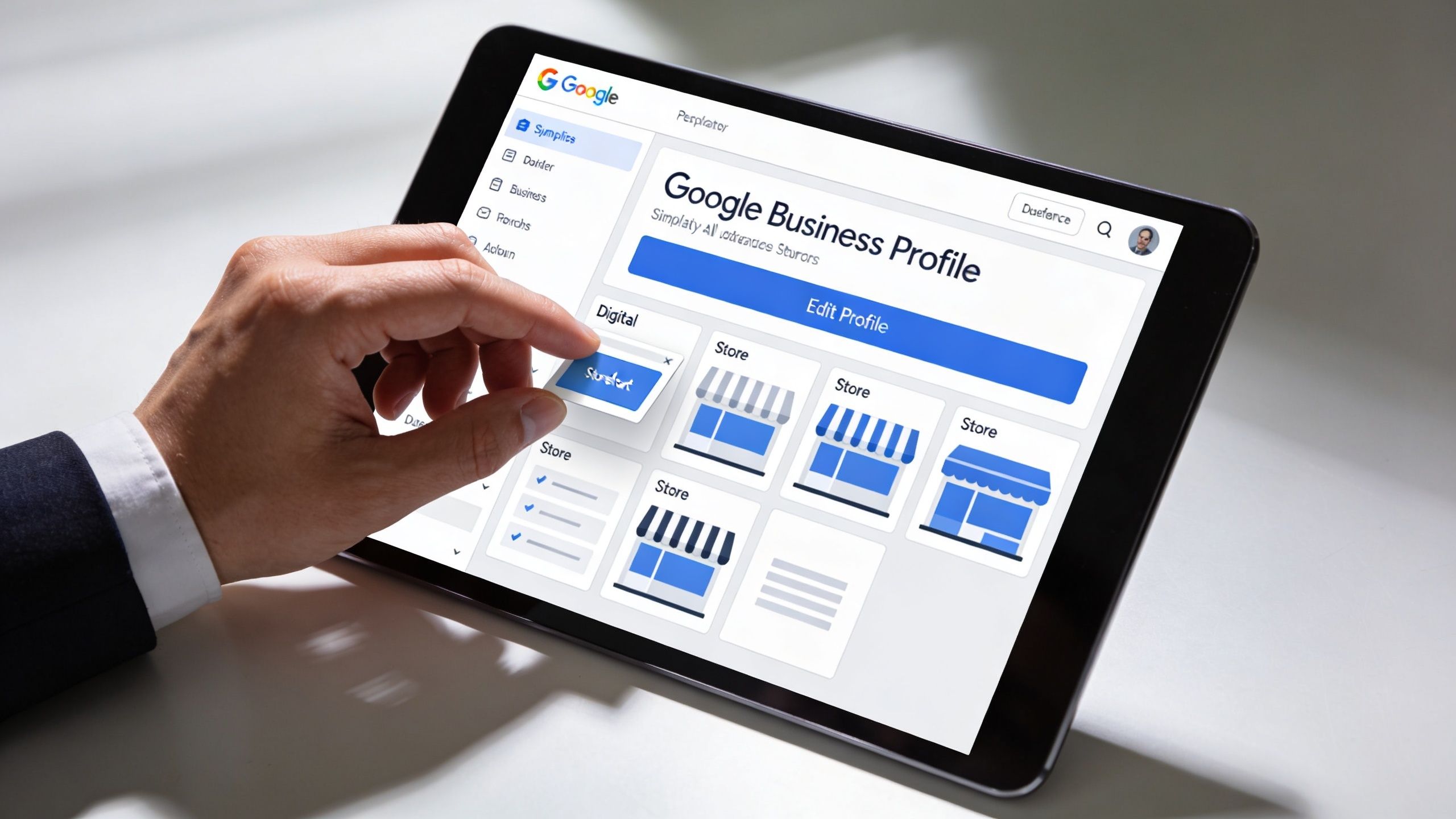
Your Google Business Profile is the control center. If it’s incomplete, vague, or miscategorized, everything else you do has less impact.
Choose the category that actually matches buyer intent
The first decision is the one people rush through. That’s a mistake. According to Ahrefs’ Google Maps SEO analysis, selecting the most specific primary category is the #1 ranking factor in Whitespark 2026 data, and the wrong category can keep a business from ranking for target queries.
If you’re a personal injury firm, don’t hide inside a broad label. If you’re an HVAC contractor, don’t settle for something generic. Pick the category that best reflects the core service customers search for. Then add a small set of secondary categories that support related offerings without muddying the profile.
Here’s the standard I use during a GBP audit:
- Primary category first: Choose the closest exact match to your main revenue driver.
- Secondary categories with restraint: Add only the supporting services that are real and meaningful.
- No category stuffing: More isn’t better if it confuses the listing.
If you want a solid external walkthrough to compare against your own setup, this guide for local businesses on GBP is useful for checking the basics and spotting missed fields.
Fill every field like it affects ranking, because it does
Owners often fill the obvious fields and stop. Name, phone, hours, website, done. That’s enough to exist. It’s not enough to compete.
Google uses your profile to understand what you do, where you serve, and whether the listing is actively managed. That means your audit should include:
- Services: Add your real services individually, with plain-language descriptions.
- Business description: Mention core offerings and locations naturally, not as a keyword dump.
- Hours and special hours: Keep them accurate.
- Attributes: Add what applies, whether that’s appointments, accessibility, or service options.
- Photos and updates: Keep the profile alive, not frozen.
A half-built profile tells Google the business exists. A fully built profile tells Google what searches it should rank for.
There’s also a trust issue here. If your profile is bare, but your site claims expertise across multiple services and markets, the inconsistency weakens the signal. The profile and website need to agree.
For businesses trying to strengthen local credibility across paid and organic visibility, it also helps to understand how Google-screened trust signals like the Google Guaranteed badge fit into the broader local search picture. It’s not the same thing as Maps SEO, but it reinforces the same principle. Verified trust wins attention.
Build Unbeatable Trust with a Dominant Review Strategy
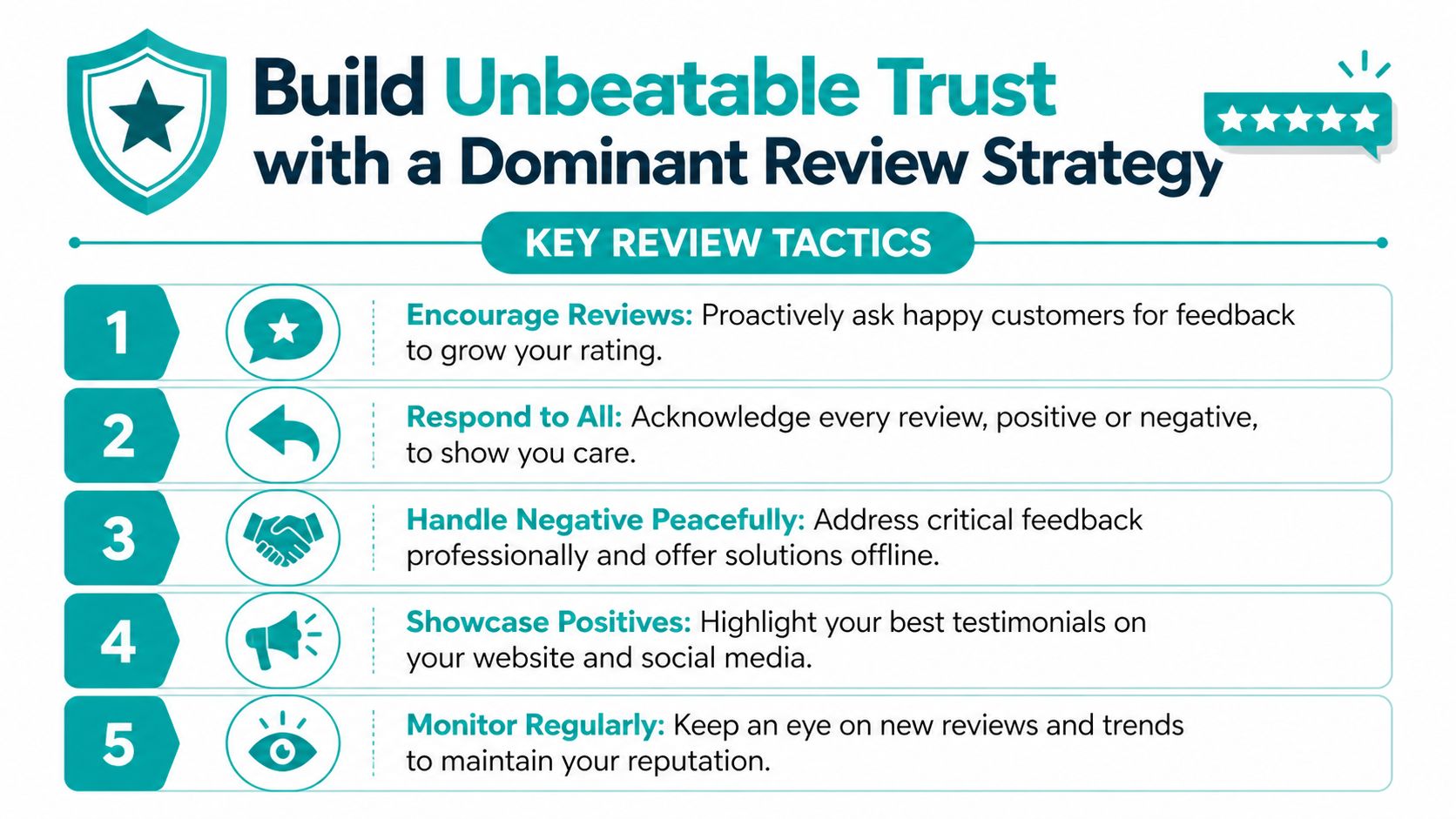
Reviews are the fastest lever in local Maps SEO because they influence both rankings and click behavior. A business owner can spend months tweaking site pages and still see less movement than they get from a disciplined review engine.
Why review velocity beats occasional bursts
A lot of businesses ask for reviews only when they remember. That creates random spikes followed by silence. Google tends to reward consistency more than one-off pushes.
Per Upward Engine’s Google Maps ranking guide, Google heavily weights review recency, and increasing review velocity from 2 reviews per month to 6 per month can improve rankings by 2 to 4 spots in 30 days. That’s why a proactive review system often outperforms fancier tactics.
The key is not just quantity. It’s a combination of:
- Freshness
- Detail
- Steady cadence
- Healthy rating trend
Detailed reviews that mention real services also help reinforce topical relevance. A review that says “great company” is nice. A review that says “fast AC repair in Lake Mary” is far more useful.
Three non-pushy ways to get more reviews
Most owners under-ask because they don’t want to sound awkward. Fair concern. The answer isn’t being pushy. It’s building the ask into your workflow so it feels normal.
Use a timed follow-up message
Send a short text or email after the job is complete, after the product is delivered, or after the service outcome is clear. Keep it brief. Thank them, then include the direct review link.Put the review request where the interaction already happens
Add a QR code to invoices, countertop materials, service completion pages, or post-appointment emails. Don’t make customers hunt for the next step.Train staff to ask at the right moment
The best time is right after a customer says they’re happy. Not days later when the emotional momentum is gone.
A strong review strategy also includes response discipline. Reply to every review, including the negative ones. Pros don’t argue in public. They acknowledge, clarify, and move the resolution offline.
When owners ignore reviews, they’re not just missing customer service opportunities. They’re signaling inactivity.
If you want proof that local SEO performance tracks with disciplined reputation work, this breakdown of how local SEO delivers visible business results connects the dots well.
Solidify Your Authority with Citations and Local SEO
Once the profile is clean and reviews are moving, authority becomes the difference between appearing occasionally and staying visible. Here, off-site consistency and on-site local relevance have to work together.
Citations are trust signals, not busywork
A citation is any online mention of your business name, address, and phone number. Owners often treat directory listings like low-value admin work. That’s shortsighted. Citations help Google verify that your business is a legitimate local entity with stable contact information across the web.
According to MapLift’s Google Maps ranking analysis, submitting to 15 to 20 key directories over 60 to 90 days can improve prominence and lift Google Maps rankings by 2 to 3 positions.
That doesn’t mean blast your business into every directory you can find. It means build a controlled citation layer with accurate NAP data in the places that matter.
Priority targets usually include:
- Major map and directory platforms: Yelp, Apple Maps, Facebook
- Local business organizations: chambers of commerce and regional directories
- Relevant niche directories: legal, healthcare, home services, or industry-specific sites
Consistency is key. If one listing shows a suite number and another doesn’t, if one has an old phone number, or if one shortens the address differently, trust gets diluted.
Your website has to confirm the same local story
Citations alone won’t carry a business in a competitive market. Your website has to support the same local entity Google sees in the profile.
That means building pages that connect service + geography in a natural way. A generic “Services” page is weak. Separate pages like “PPC Advertising in Charlotte” or “SEO Services in Lake Mary” give Google more precise context about what you do and where you do it.
Here’s what strong local pages usually include:
| Element | What it should do |
|---|---|
| Title and headings | Match the service and market clearly |
| On-page copy | Explain the service in that location without boilerplate spam |
| NAP details | Match the business information used elsewhere |
| Internal links | Connect related services and location pages logically |
| Schema markup | Help search engines parse business details cleanly |
For businesses evaluating whether their current site can support this kind of local strategy, this page on local SEO services in Lake Mary is a helpful benchmark for what a dedicated local presence should reinforce.
Before going further, this video gives a practical overview of how local SEO support work ties into visibility:
Local links complete the trust web
Citations verify existence. Local links build authority.
If you’re a real business in a real market, other relevant local sites should mention or link to you over time. That can come from chambers, partnerships, sponsorships, local media, neighborhood organizations, or niche resources. One strong local link often does more than a pile of junk listings.
A practical reference here is this guide on effective local link building, which lays out the kinds of partnerships and placements that strengthen local authority without resorting to spam.
Businesses that dominate Maps usually don’t rely on one signal. They stack profile strength, review flow, citation consistency, local pages, and local mentions until the market sees them as the default choice.
Leverage Advanced Signals for a Competitive Edge
Once the foundation is strong, small signals start deciding close contests. In these instances, activity, engagement, and service area configuration can create separation.
Photos and posts act like tie-breakers
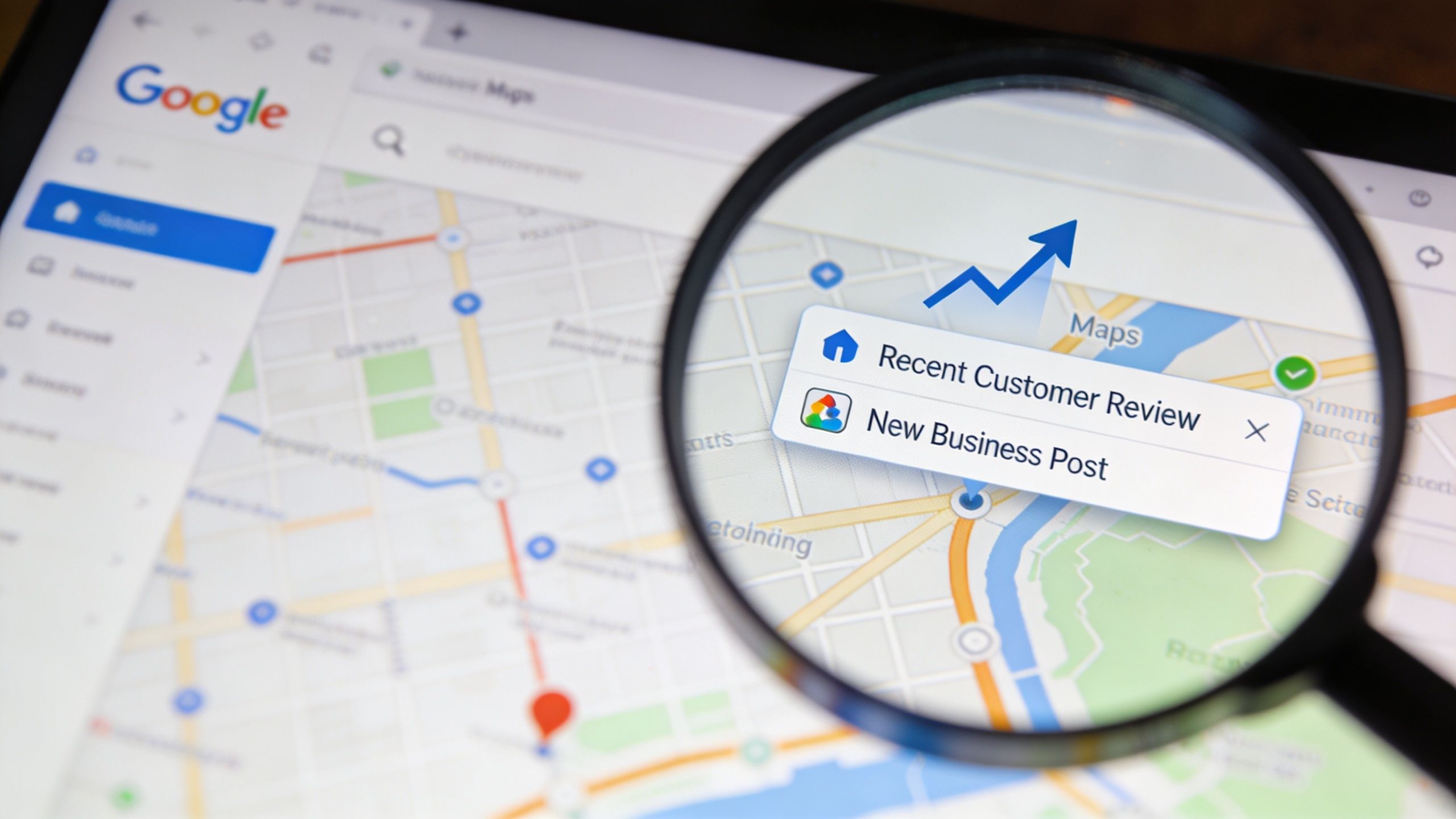
A stale profile looks unmanaged. An active profile gives customers more reasons to engage, and those engagement signals matter.
In the advanced layer, I pay close attention to photos and posts because they influence both user behavior and profile freshness. Per the Merchynt guide on ranking higher in Google Maps, profiles with actively updated photos see 42% more requests for directions and 35% more website visits.
That’s not cosmetic. It changes how often people interact with the listing.
Weekly Google Business Profile posts also help keep the listing active. The easiest rhythm is a rotating cycle:
- Week 1: Offer or promotion
- Week 2: Project or service spotlight
- Week 3: FAQ or objection-handling post
- Week 4: Testimonial or proof point
If you’re also thinking about how customers search by voice and conversational queries, this overview of voice search optimization is relevant because the same clarity and intent matching show up in local discovery.
Service area businesses need a different setup
Service Area Businesses need extra care because they don’t always have a storefront that lines up neatly with search geography. Contractors, agencies, consultants, and many home service brands fall into this bucket.
The common mistake is trying to force a storefront-style strategy onto an SAB. The better approach is to define service areas accurately, align those areas with the places you serve, and support them with corresponding site pages, reviews, and citations. Don’t fake coverage you can’t fulfill. That creates friction with both users and the platform.
There’s also a strategic trade-off here. A very broad service area can dilute the local relevance signal if the rest of your setup is weak. A tighter footprint, backed by stronger local proof, usually performs better than vague metro-wide positioning with no support behind it.
If two businesses are close in category match and reviews, the one with stronger engagement and cleaner service-area alignment often wins the spot.
Your Path from Invisible to In-Demand on Google Maps
Google Maps rankings improve when the business stops chasing hacks and starts managing the whole system. That system is straightforward even if the execution takes discipline. Build a precise profile for relevance, create a steady review engine for prominence, and reinforce the business across citations, local pages, and authority signals.
The businesses that rise fastest usually do boring things consistently. They pick the right category. They complete the profile fully. They ask for reviews every week, not every once in a while. They keep NAP data consistent. They publish updates. They support Maps with location-aware website content instead of hoping the listing can carry everything by itself.
There’s also a reason a lot of owners stall halfway through. None of this is complicated in isolation, but doing it well requires follow-through. One missed field won’t kill rankings. A pattern of weak execution will. That’s why Google Maps success often goes to the operator with the best process, not just the best intentions.
As noted earlier, a sustained effort around review quality and profile completeness can move rankings significantly. Maintaining a 4.4+ star rating and achieving 100% profile completion can lead to 40%+ ranking improvements in 60 to 90 days, based on the earlier cited Merchynt data. That’s what turns a passive listing into a real lead channel.
If you’re deciding whether to tackle this internally or hand it to specialists, the core question isn’t whether it can be done. It’s whether this is the highest-value use of your time as an owner.
If you want expert help turning your Google Business Profile, website, reviews, and local SEO into a unified growth system, talk with Emulous Media Inc. We help Central Florida businesses and growing brands build stronger visibility across advertising, marketing, website design, media production, and AI automation. Book a free consultation, call 689-255-6327, or visit the contact page to start the conversation.